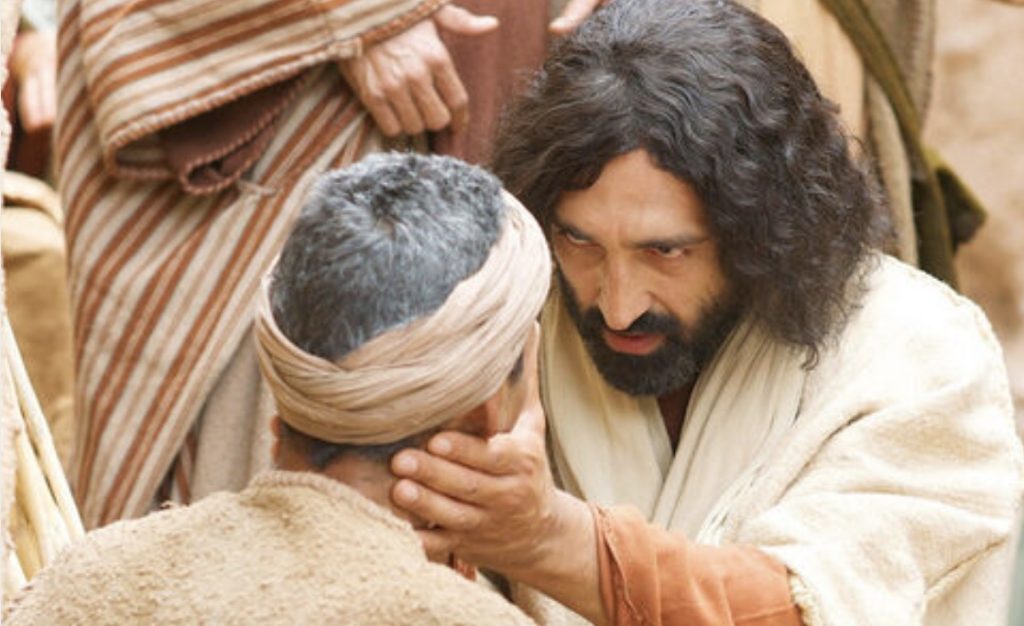
Have you ever wondered what would Jesus do if he came to your home town?
Several weeks ago I was pondering the way Jesus went to different towns and villages, not to mention bigger cities as well. And what would Jesus do? Wherever he went, he taught and preached, and often he healed people. Sometimes, a lot of people.
This kind of overview of Jesus’s ministry is summed up in
Jesus went through all the towns and villages, teaching in their synagogues, proclaiming the good news of the kingdom and healing every disease and sickness. Matthew 9:35 NIV
Have you ever imagined what it might have been like to hear Jesus teach and preach, and to watch him heal people, maybe even be healed yourself? It was like nothing the world had ever seen before.
Let’s say you lived back then and you had been following Jesus, as often as you could, wherever he went. You loved to hear him tell stories about farmers planting seeds, and women baking bread. And you had seen him heal lots of people.
If you lived 2,000 years ago, what would Jesus do when he came to your town?
But one day you heard he was coming to your home town. Everyone was excited. Lots of the town officials and some of the leaders from the local synagogue went out to greet him. He accepted their hospitality graciously, but then he started walking and went straight to the lame beggar up the road about 30 feet.
You passed that fellow at least two or three times a week, but usually never even looked at him. Once in a while, on a High Holy Day, you felt sorry for him and gave him a few small coins. But you never really thought anything about him as a person.
Jesus went straight to him and sat down with him and started talking quietly. After a few minutes, the man’s face lit up with the biggest smile you’d ever seen and then he actually stood up and did a little dance of joy. You had never seen this man walk before. And your heart was beating much faster than usual.
Seeing people in a new light of love
When you had seen Jesus heal all those other people, it seemed so incredible and other worldly, but when you saw him heal this man from your home town who you had seen almost every day for years, it seemed much more real.
All of a sudden you now saw the man, who you had only seen before as lame and unworthy of your attention, as a valuable member of the community. You realized Jesus must have loved this man and seen his worth as an individual in order to heal him.
And this was the first time you had a deep desire to be able to see and love people the way Jesus did.
Now, I realize this just a hypothetical situation. We know very little about what the people who watched Jesus heal someone were thinking.
What would Jesus do in your town today?
But I want to set the stage for thinking about what Jesus would do if he came to your home town or city.
Who would he talk to and what would he say? Would he tell the same parables he told 2,000 years ago or would he make up new ones to fit today’s world? Who would he hang out with? Would he pick a new set of 12 disciples? Would you be one of them? Would you want to be one of them?
Who would Jesus heal? Who would follow him? Who would oppose him? How would the churches respond to him? Would Jesus rebuke some of the religious leaders in your community because of their hypocrisy? Would he rebuke you?
I would imagine Jesus would do today in my town exactly what he did in the towns he visited 2,000 years ago. He would go to the churches, talk to those who would listen, heal a bunch of people, spend time with folks who were being ignored, isolated, or deemed unworthy by others. And he would talk to leaders in the community who were receptive to his ideas.
Why is this important?
Now you may be thinking: “Hey James, this is all well and good, but what’s the point you’re trying to make.? Of course Jesus would talk to people, tell them about God, and heal them. Of course he would minister to the outcasts in your town or in my town. What are you getting at?”
That’s a great question. The point is that if Jesus would do all these things in your town or mine that he did 2,000 years ago, and since we’re supposed to follow his teachings and walk in his footsteps, why aren’t you and I doing the things in our communities that Jesus would be doing if he were here.
And maybe that’s part of the problem. We think Jesus isn’t here. We think he is gone and will return a second time.
But one of the last things Jesus said just before he ascended was
Therefore go and make disciples of all nations, baptizing them in the name of the Father and of the Son and of the Holy Spirit, and teaching them to obey everything I have commanded you. And surely I am with you always, to the very end of the age. Matthew 28:19, 20 NIV
Is Jesus still with us?
Most Christians love to talk about the first part of what Jesus says here, often called the Great Commission, to go into all the world and make disciples of everyone, teaching them to do everything Jesus said. But they often don’t emphasize that last part when Jesus says, “And surely I am with you always, to the very end of the age.”
If you accept the idea that Jesus is not here, you’re going to think and act differently than if you are actually conscious of Christ’s constant presence in our midst.
When I was in first grade, the teacher, Miss Elam, left the room one day to go to the school office for a few minutes. Today I don’t think teachers would ever leave a class unattended, but that was a common practice years ago.
Within a minute of her leaving the room, everyone started talking and quit doing the project she had told us to work on. The minute she walked back in the room, we fell instantly silent. She told us that even if she had to leave the room, we should keep doing what we were supposed to do, as if she were still in the room.
I’ve wondered at times if she did this on purpose just to teach us this lesson. After a few more situations like this, we learned to stay focused and not get too noisy when she had to leave the room for a few minutes.
If Jesus was looking over your shoulder, would you act differently?
If you saw Jesus sitting at the desk next to yours at school or at work, or in the café where you were eating, and you saw him looking at you, and you knew it was Jesus, would you act differently? I know I would.
I would probably try to impress him, or hopefully I would be reminded to do the best I could or whatever is the most loving thing to do, whatever the situation was.
If you knew Jesus was looking over your shoulder every minute of your day, would you act differently? Would it scare you because you’d be afraid of not doing as good a job as you know Jesus would want you to do? Or would you be inspired and encouraged to be more loving and do more than you thought you could?
Well, Jesus, as the man who walked on the earth 2,000 years ago, who talked and slept and ate and healed people, is not here in that way today. When Jesus said he would be with us even to the end of the age, he didn’t mean his physical body, but his spiritual presence, his essence, or spiritual identity, which is the Christ.
Feeling Christ’s presence
Christ is always here and always with you, even if you’re not aware of it. Some people would call it: Jesus is with me. But it doesn’t mean his physical body is here with us. It means his presence.
The more you are aware of Christ’s presence everywhere you are and everywhere you go, the more you’ll be impelled and inspired to do what is right, to love the way Jesus did, and to bless others the way he did.
To the degree you’re aware of Christ’s presence, you’ll become more Christlike in the way you think and speak.
And you will begin to do the things in your community that Jesus would do if he were there.
What would Jesus do in small towns?
Let’s say you live in a small town, a village really, of just a few hundred people. Everyone knows everyone else. You know who is responsible, who is lazy, who is sick, or who lost their job, who cheated on his wife. You know pretty much everything about everyone in town.
So ask yourself: Who would Jesus talk to? What would he say? It would probably be the people who needed help, the people who were sick or caught up in a sinful lifestyle, the ones who were ignored by others. It might be the town leaders.
What if you lived in a large town of several thousand people? There’s no way you could know everyone. But you know your little world in the community. Who would Jesus talk to in your town? Who is crying out for help? Who has been abused, chewed up, and spit out by the systems of society at work, at school, or at church?
What would Jesus do in large cities?
What if you lived in a big city of several hundred thousand people? There’s so much going on there’s no way to even know about it all or the people involved. How would Jesus behave in this community? He would do as he always did, ask God where to go, what to do, who to talk to talk to, and what to say or not say. And he would help and heal people others had not.
And what if you lived in a city of several million people? It’s easy to disappear in a place like that. You can become almost invisible in a city with so many people. Jesus would look for the people who didn’t feel seen and see them in a way they knew they were seen. Or to put it another way, he would love people in a way they knew they were loved. And he would heal people.
He would probably stir up some opposition as well.
In whatever size town or city you live, even if you live out in the country and your nearest neighbor is 55 miles away, there is always an opportunity to think and act like Jesus, to love like Jesus did.
Facing opposition
Once when Jesus was spending time with some folks in a community who were not at the top of the socially acceptable list, he got criticized for being with them.
When the teachers of the law who were Pharisees saw him eating with the sinners and tax collectors, they asked his disciples: “Why does he eat with tax collectors and sinners?”
On hearing this, Jesus said to them, “It is not the healthy who need a doctor, but the sick. I have not come to call the righteous, but sinners.” Mark 2:16, 17 NIV
Jesus went to the people who needed help and redemption.
He would do the exact same today. In whatever community he found himself, he would go to people who were not living the most righteous lifestyle. He would treat them with respect. He would see their value as children of his Father. And he would love them in a way they felt this love. He would heal broken hearts and broken bodies.
If you were one of those despised tax collectors 2,000 years ago, who would you rather spend time with, the self-righteous Pharisees who condemned you and thought you were no better than wild dogs, or with Jesus who treated you with respect, listened to the struggles in your heart, and gave you a glimpse of hope for your life?
We don’t know exactly what Jesus said to these sinners and tax collectors. He may have rebuked them. He may have told jokes and laughed with them. He probably told them about God’s love for them and how they could live a better life. But whatever it was, they must have felt his love.
Jesus and Zacchaeus
I love the time Jesus in effect commanded one of the most significant tax collectors of all, Zacchaeus, to come down from the sycamore tree he had climbed up to get a better look at Jesus. Then he invited himself over to Zacchaeus’s house.
Here again, we don’t know what they talked about but we do know the result of that conversation.
Zacchaeus stood up and said to the Lord, “Look, Lord! Here and now I give half of my possessions to the poor, and if I have cheated anybody out of anything, I will pay back four times the amount.”
Jesus said to him, “Today salvation has come to this house, because this man, too, is a son of Abraham. Luke 19:8, 9 NIV
The self-righteous Pharisees could only see someone like Zacchaeus through a lens of condemnation and judgement, considering the way he had cheated people out of their money. But Jesus looked through the lens of love with a heart full of compassion. No wonder Zacchaeus responded the way he did.
What would Jesus do = What will you do?
Now look at your community through the eyes of Jesus, with the spirit of the Christ, which is always with us to the end of the age.
Who are the neglected, despised, and condemned people in your town or city? Who gets ignored or belittled or treated as less than human? Who is the bullied kid at school, or the lonely person who feels abandoned? Who needs to be healed? Who needs to feel God’s love?
Who is the modern day Zacchaeus in your midst, in a position of great power and authority but is secretly unhappy and looking for deeper meaning in life?
Wherever you live, there is someone being ignored or oppressed by others, who Jesus would talk to, minister to, love, and heal if he was there. There is someone who is cheating fellow citizens or taking advantage of them.
How much do you really want to follow Jesus in the Way he has given us? Will you look at everyone in your community with the compassion Jesus had and treat them the way he would?
You can’t do it all by yourself
Now you’re probably thinking: Hey James, this sounds great on a podcast, but in real life there’s no way I can minister to everyone in my town the way Jesus helped people.
That is a very good point. There is no way possible for you to do it all, especially if you live in a big city. And even if you could, that would be rather selfish in a funny sort of way. There would be no one left for other followers of Christ to help. You need to share the opportunities.
This has to be a collective effort.
You can only help the people God directs you to help. God will put them in your path or put you in their path. Or He will tell you to go to someone for a very specific purpose. It really comes down to you having the kind of working relationship with God where you hear His voice and follow His guidance.
Whenever I hear of another mass shooting or of someone committing suicide, my prayer is pretty simple. I ask God if there’s anyone in my sphere of influence who is contemplating such drastic actions, please open my eyes to see them with love and compassion and give me the opportunity to interact with them in a way that dissolves the negative desires to harm themselves or others.
And there have been a handful of times when this prayer has been answered and I was able to encourage someone to embrace life with more joy and hope.
People are calling out for your Christlikeness
There are so many people calling out for help in the world today. Some of them don’t even know it. They are not all in your town or your city. But wherever you live, there is someone, several someones, many someones who need to feel and experience God’s love.
What would Jesus do if he lived in your community? Who would he love? Who would he minister to? Who would he spend time with? Who would he heal?
Now it’s easy for me to say these words here on the podcast, but this is not such an easy task to carry out. In fact, it might seem impossible. And it is impossible, unless you imbibe the spirit of Christ.
Paul says,
…we have the mind of Christ. 1 Corinthians 2:16 NIV
There is no way you can do what Jesus did with your human mind or your human heart. You can only do it with the mind of Christ. And I’ll add, the heart of Christ.
You can think and love like Jesus
What is the mind of Christ, or as I like to put it, the mindset of Christ?
Jesus makes it pretty clear when he says,
Very truly I tell you, the Son can do nothing by himself; he can do only what he sees his Father doing, because whatever the Father does the Son also does.
I can do nothing on my own. John 5:19, 30 NIV
The only way you can follow Jesus’s example is to have this same attitude Jesus did, that you can do nothing on your own. You can only do what you see God doing.
So it really boils down to that: What do you see God doing in your community? Do you see God loving everyone? Then you will love them too, not with your heart or your love, but with God’s heart and God’s love.
What would Jesus do in your community? He would wake up each morning and ask his heavenly Father what he should do, where to go, who to talk to. He would ask God what He was doing and who He was loving and then do likewise.
What would Jesus do in your community? Then go and do likewise.
_____________
James Early, the Jesus Mindset Coach, is a Bible teacher, speaker, and church mentor. He conducts Bible workshops online and in person. His focus is on getting back to the original Christianity of Jesus by learning to think, pray, and love like Jesus. Contact him here.
Make a donation to support the show
Listen and leave a review on



_____________
Bible References
Matthew 9:35 NIV
35 Jesus went through all the towns and villages, teaching in their synagogues, proclaiming the good news of the kingdom and healing every disease and sickness.
Matthew 28:19, 20 NIV
19 Therefore go and make disciples of all nations, baptizing them in the name of the Father and of the Son and of the Holy Spirit,
20 and teaching them to obey everything I have commanded you. And surely I am with you always, to the very end of the age.
Mark 2:16, 17 NIV
16 When the teachers of the law who were Pharisees saw him eating with the sinners and tax collectors, they asked his disciples: “Why does he eat with tax collectors and sinners?”
17 On hearing this, Jesus said to them, “It is not the healthy who need a doctor, but the sick. I have not come to call the righteous, but sinners.”
Luke 19:8, 9 NIV
8 Zacchaeus stood up and said to the Lord, “Look, Lord! Here and now I give half of my possessions to the poor, and if I have cheated anybody out of anything, I will pay back four times the amount.”
9 Jesus said to him, “Today salvation has come to this house, because this man, too, is a son of Abraham.
1 Corinthians 2:16 NIV
16 …we have the mind of Christ.
John 5:19, 30 NIV
19 “Very truly I tell you, the Son can do nothing by himself; he can do only what he sees his Father doing, because whatever the Father does the Son also does.
30 I can do nothing on my own.