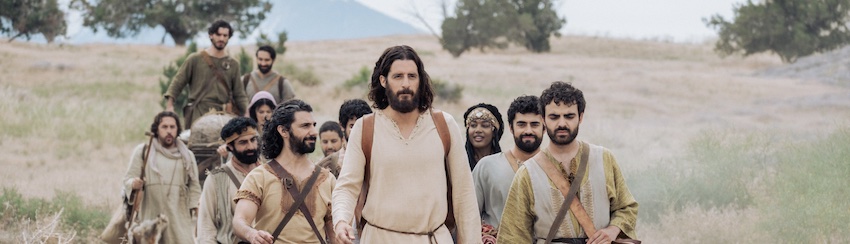
Do you follow the Shepherd or the sheep?
One of my favorite ways to think about Jesus is as a shepherd guiding and caring for his sheep, his followers. And that’s what sheep do, is follow the shepherd. But I’ve noticed that when I take my eyes off Christ, the Shepherd, and follow what I want to do or what some of Christ’s other sheep are doing, things don’t usually go too well.
Just imagine for a minute you’re a shepherd with 100 sheep. They all know and trust you because you make sure they have plenty of fresh water and green grass to eat. What if one of the sheep, for whatever reason, takes a wrong turn and quits following you, as the shepherd. It could get seriously lost.
And what would happen if some of the other sheep see this this sheep go in a different direction and follow that sheep instead of you? It might not be too serious at first, but that wayward sheep doesn’t necessarily know the countryside or the best way to go. It could easily get in some pretty serious trouble. And if other sheep were following it, things would only get worse.
Jesus called people to follow the Shepherd
This is obviously a metaphor for following Jesus. As followers of Christ, as sheep in his pasture, our job is to keep our eyes on Christ and follow him at all times. When we think it might just be easier to follow the sheep that’s in front of us instead of Jesus, it can be a life saver to remember Jesus’s words to so many people in his ministry,
And he saith unto them, Follow me, Matthew 4:19 KJV
This is the way Jesus called Peter and Andrew, along with James and John. Then Matthew, and there was the young ruler who had great wealth, and so many others. Some accepted the invitation to follow him and some did not, or at least not in the part of their story we have in the Bible. I always like to give these Bible characters the benefit of the doubt and hold on to the possibility they might have made a different choice later.
The point is, Jesus asked people to follow him. And he often painted the image of himself as a Shepherd.
“I am the good shepherd; I know my sheep and my sheep know me.” John 10:14 NIV
As I said, as followers of Jesus, that’s what we’re supposed to do, follow the Shepherd.
But sometimes we don’t. Sometimes we go off on our own. Sometimes we start following other sheep. And sometimes we get fooled by people with evil motives, hiding behind a façade of pretending to be a follower of Jesus. Jesus warns us of people like this.
False shepherds
Watch out for false prophets. They come to you in sheep’s clothing, but inwardly they are ferocious wolves. By their fruit you will recognize them. Matthew 7:15, 16 NIV
Not everyone who claims to be a Christian is actually following Christ. And sometimes it’s hard to tell by what they say and what they do. But as Jesus points out, the only way to know for sure is to look at the fruit of their words and actions.
Jesus also points out that his sheep will never follow a stranger.
But they will never follow a stranger; in fact, they will run away from him because they do not recognize a stranger’s voice. John 10:5 NIV
That’s why false prophets, or we could say false shepherds, try to disguise themselves a sheep, as fellow Christians so they can mingle with the other sheep and try to influence them to stop following Christ.
Sheep in shepherds’ clothing
But there’s another danger Jesus didn’t spell out quite so clearly. It’s one thing to watch out for wolves in sheep’s clothing. We also need to be alert to sheep who wear shepherds’ clothing.
How often does someone, who is sincerely following Christ, start thinking they want to have some influence on the way things are going. They are tempted by the perceived power and prestige of church leadership.
And instead of being humble servant-leaders, they want to be in charge of things, be in control of what’s going on, usually more to satisfy their unchecked ego than wanting to surrender their human will to follow God’s will.
Church history up to and including today, is full of too many examples of this sort of thing. And it’s not just church leaders who are tempted to want to be in control.
Follow the Shepherd
I don’t know how many times I’ve talked to people, and I mean earnest and sincere followers of Jesus, who daydream about what they would do if they were in charge of church policy, procedures, and activities. They think they know better and sometimes even influence other church members to follow them.
Now just to be fair, sometimes these folks do have a better idea of what could be done in a more Christlike way, because they have their eyes on Christ. They are sincerely trying to follow the Shepherd, Christ. In such a case, something good often comes from this kind of thing.
But if someone is full of their own opinions and wants to be in charge of things just to satisfy their ego, then whoever follows them has quit following Jesus and is following one of the sheep. This is almost always disastrous.
There’s a good example of this in 3 John. I’ve never really given much attention to this passage and I don’t even know for sure how to pronounce this guy’s name. But it’s a good example of what I’m talking about.
I wrote to the church, but Diotrephes, who loves to be first, will not welcome us. So when I come, I will call attention to what he is doing, spreading malicious nonsense about us. Not satisfied with that, he even refuses to welcome other believers. He also stops those who want to do so and puts them out of the church. 3 John 1:9, 10 NIV
Talk about wanting to be in control.
Look at the fruits
As I said, I wasn’t really familiar with this little vignette of church drama. Apparently Diotrephes wanted so much to be in charge he no longer was following Christ.
How can you tell? By using Jesus’s litmus test of looking at his fruit, in this case lack of Christian hospitality and love for fellow Christians, which Jesus specifically said was one of the fruits of his true followers. And anyone who disagreed with Diotrephes was put out of the church.
This is the exact opposite of what Jesus expected of his followers, which he explains:
“A new command I give you: Love one another. As I have loved you, so you must love one another. By this everyone will know that you are my disciples, if you love one another.” John 13:34, 35 NIV
This is a good litmus test for us today to evaluate someone’s fruit: Do they love their fellow Christians the way Jesus loved us?
Coming back to Diotrephes for just a minute, anyone going along with him, either out of fear, or their own desire to be in power, or to be on the side of who had power, was also failing to follow the Shepherd, Christ.
Wolves disguise themselves as sheep and wayward sheep disguise themselves as shepherds.
Keep your eyes on Christ and follow the Shepherd
And this is why we always need to keep our eyes Christ himself in order to follow the Shepherd.
There are lots of other times in the Bible when people wanted to be or stay in charge of things. One of the most obvious examples is the way the Pharisees didn’t just want to be in power, but wanted to be seen by others as powerful and pious.
Jesus rebuked the Pharisees for many things, and this was certainly one of them.
“Everything they do is done for people to see: They make their phylacteries wide and the tassels on their garments long; they love the place of honor at banquets and the most important seats in the synagogues; they love to be greeted with respect in the marketplaces and to be called ‘Rabbi’ by others.” Matthew 23:5-7 NIV
It’s easy to be judgmental of the Pharisees, and it’s easy to see those Pharisee tendencies in church leaders today. But it’s not always easy to see your own inner Pharisee.
Are you a recovering Pharisee?
I was talking to a new friend recently who said he was a recovering Pharisee. We both laughed. I can relate to that. I was a bit of a Pharisee myself years ago. I joked we should start a Pharisees Anonymous group. A lot of people need something like that, and not just church leaders.
Now the Pharisees of Jesus’s day were not even pretending to be followers of Jesus, but I’m using the mindset of the Pharisees to illustrate one of the problems in the Christian church today.
When one of the sheep starts acting like a shepherd and wants you to follow them, their teachings, their ideas, no matter what, it’s time to stop and evaluate if you are following someone besides Christ. It’s time to get back to and follow the Shepherd.
The human ego’s desire to be in charge is nothing new and Christians are not immune to this temptation. Even Jesus’s disciples got caught up in who would be greatest.
Even Jesus’s disciples had to be reminded to follow the Shepherd
Once, when Jesus and his disciples arrived at their destination he asked them a very direct question.
They came to Capernaum. When he was in the house, he asked them, “What were you arguing about on the road?” But they kept quiet because on the way they had argued about who was the greatest. Sitting down, Jesus called the Twelve and said, “Anyone who wants to be first must be the very last, and the servant of all.” Mark 9:33-35 NIV
This should be the model for all church leaders today, as well as all the rest of us, not seeking greatness, but serving others as Jesus did.
Or as I like to say: A lot of Christian, especially leaders, need to eat a great big slice of humble pie.
Diotrephes certainly would have benefited from eating a piece of that humble pie. But it doesn’t look like he ever bit into it.
The disciples did however. They accepted and took to heart Jesus’s rebuke of their desire for greatness. Hopefully, you and I can learn from their example.
Sheep following other sheep
This problem of sheep acting like shepherds is not new to the Christian church today. Paul had to address this as well in the churches of his day . In his first letter to the church in Corinth he wrote:
You are still worldly. For since there is jealousy and quarreling among you, are you not worldly? Are you not acting like mere humans? For when one says, “I follow Paul,” and another, “I follow Apollos,” are you not mere human beings? What, after all, is Apollos? And what is Paul? Only servants, through whom you came to believe—as the Lord has assigned to each his task. I planted the seed, Apollos watered it, but God has been making it grow. So neither the one who plants nor the one who waters is anything, but only God, who makes things grow. The one who plants and the one who waters have one purpose, and they will each be rewarded according to their own labor. 1 Corinthians 3:3-8 NIV
The sheep, the church members in Corinth, were starting to pick other sheep to follow and arguing about which sheep was better to follow. Paul put a stop to it and reminded everyone basically that he and Apollos were both sheep and that God was the one actually making things happen. He doesn’t specifically mention Jesus right here, but throughout all his writings he encourages everyone to follow the Shepherd, Christ.
Following your church pastor?
Now, you may be thinking: Hey James, what if I have a really good pastor at my church who is truly a servant-leader, keeps his eyes on Christ, and is making every effort to be a faithful follower of Christ and encourages us to follow the Shepherd? He has helped me so much to follow Jesus better. Shouldn’t I do what he tells me? Shouldn’t I follow his good example?
Well, first of all, if you have a pastor like that leading your church, you are very fortunate indeed, but I would still encourage you to keep you main focus on following Christ. Every human being, including all pastors, preachers, and priests, cannot be a perfect example to follow every minute of every day.
It’s wonderful to have such a good example in your midst, but it’s always best to focus first and foremost on following Christ instead of the way someone else follows Christ. Then, if that person does slip a bit here and there, you won’t be following their example.
Because you follow the Shepherd himself, you’ll be able to be supportive if your pastor has a moment of minor or major weakness and you’ll be encouraging instead of judgmental.
All sheep need to follow the Shepherd
One of the real issue here is church leadership. Jesus never ordained people to be pastors in churches. That developed gradually over time into what we have today. Yes, the early church had deacons and leaders, but during a church gathering, for example, everyone came together to edify one another. No one person was in charge, as is often the case in modern day churches.
A couple of years ago I interviewed Tom Wadsworth who has done a lot of research about the early Church and how they gathered. There were no preachers, pastors, or priests like we have today. It was all about edifying one another and everyone contributed to that.
The goal was to follow the Shepherd, not have only one of the sheep tell them what to do. Episode 267: The Real Reason to Go to Church with Tom Wadsworth.
Follow the Shepherd = Follow Christ
As always, the best example for church leadership is Jesus himself.
Remember when he washed the disciples’ feet the night before he was crucified?
When he had finished washing their feet, he put on his clothes and returned to his place. “Do you understand what I have done for you?” he asked them. “You call me ‘Teacher’ and ‘Lord,’ and rightly so, for that is what I am. Now that I, your Lord and Teacher, have washed your feet, you also should wash one another’s feet. I have set you an example that you should do as I have done for you. Very truly I tell you, no servant is greater than his master, nor is a messenger greater than the one who sent him. Now that you know these things, you will be blessed if you do them. John 13:12-17 NIV
If you ever have the inclination, or even an inkling, to be in charge at church, to fill a leadership role, or just to make a positive contribution, it is well to remember Jesus’s teaching and example here.
Be one who serves. Be a sheep whose high calling is to follow the Shepherd. Don’t go along with the crowd. Don’t be bullied by someone who pushes their weight around and demands to be followed.
And if your church leadership is putting on the appearance of following Christ but they’re actually trying to get or demand everyone follow them, it might be time to look for another church where the leadership wants to follow the Shepherd, and encourages you to do the same.
Blessings come when you follow the Shepherd
So, what’s in it for you when you follow the Shepherd and keep your eyes on Christ? First of all, it keeps you on the right path and prevents you from making a lot of mistakes and bad choices. Following Christ instead of other sheep strengthens you spiritually. Your spiritual growth and progress will increase much more rapidly.
You’ll be able to encourage others and help them follow the Shepherd instead of the sheep. And that in turn helps them grow and strengthen others. This make the whole church grow, which in turn is a blessing to the community where your church is located. The light coming from your church will act like a beacon of encouragement and safety to those looking for solutions to the problems in their life.
Please take a few minutes for an honest look at who you’re following. Do you follow the Shepherd or do you follow the sheep? Keep your eyes on Christ and follow him.
_____________
James Early, the Jesus Mindset Coach, is a Bible teacher, speaker, and church mentor. He conducts Bible workshops online and in person. His focus is on getting back to the original Christianity of Jesus by learning to think, pray, and love like Jesus. Contact him here.
Make a donation to support the show
Listen and leave a review on



_____________
Bible References
Matthew 4:19 KJV
19 And he saith unto them, Follow me,
John 10:14 NIV
14 “I am the good shepherd; I know my sheep and my sheep know me.”
Matthew 7:15, 16 NIV
15 Watch out for false prophets. They come to you in sheep’s clothing, but inwardly they are ferocious wolves.
16 By their fruit you will recognize them.
John 10:5 NIV
5 But they will never follow a stranger; in fact, they will run away from him because they do not recognize a stranger’s voice.
3 John 1:9, 10 NIV
9 I wrote to the church, but Diotrephes, who loves to be first, will not welcome us.
10 So when I come, I will call attention to what he is doing, spreading malicious nonsense about us. Not satisfied with that, he even refuses to welcome other believers. He also stops those who want to do so and puts them out of the church.
John 13:34, 35 NIV
34 “A new command I give you: Love one another. As I have loved you, so you must love one another.
35 By this everyone will know that you are my disciples, if you love one another.”
Matthew 23:5-7 NIV
5 “Everything they do is done for people to see: They make their phylacteries wide and the tassels on their garments long;
6 they love the place of honor at banquets and the most important seats in the synagogues;
7 they love to be greeted with respect in the marketplaces and to be called ‘Rabbi’ by others.
Mark 9:33-35 NIV
33 They came to Capernaum. When he was in the house, he asked them, “What were you arguing about on the road?”
34 But they kept quiet because on the way they had argued about who was the greatest.
35 Sitting down, Jesus called the Twelve and said, “Anyone who wants to be first must be the very last, and the servant of all.”
1 Corinthians 3:3-8 NIV
3 You are still worldly. For since there is jealousy and quarreling among you, are you not worldly? Are you not acting like mere humans?
4 For when one says, “I follow Paul,” and another, “I follow Apollos,” are you not mere human beings?
5 What, after all, is Apollos? And what is Paul? Only servants, through whom you came to believe—as the Lord has assigned to each his task.
6 I planted the seed, Apollos watered it, but God has been making it grow.
7 So neither the one who plants nor the one who waters is anything, but only God, who makes things grow.
8 The one who plants and the one who waters have one purpose, and they will each be rewarded according to their own labor.
John 13:12-17 NIV
12 When he had finished washing their feet, he put on his clothes and returned to his place. “Do you understand what I have done for you?” he asked them.
13 “You call me ‘Teacher’ and ‘Lord,’ and rightly so, for that is what I am.
14 Now that I, your Lord and Teacher, have washed your feet, you also should wash one another’s feet.
15 I have set you an example that you should do as I have done for you.
16 Very truly I tell you, no servant is greater than his master, nor is a messenger greater than the one who sent him.
17 Now that you know these things, you will be blessed if you do them.