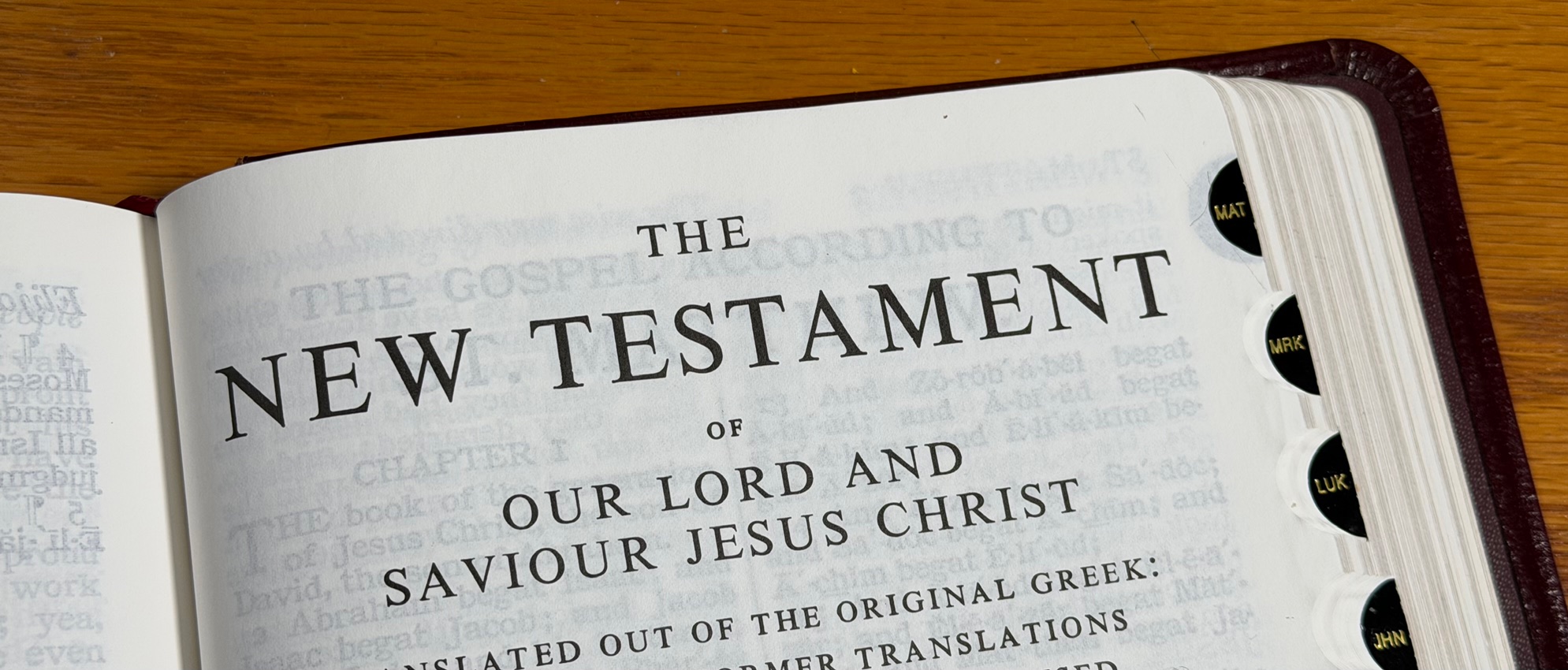
Have you ever read the New Testament books in order of date written?
Have you ever read through the entire New Testament from beginning to end? What did you learn from doing this? How did it strengthen and encourage you? But have you ever the New Testament books in order of date written?
You’re probably very familiar with many parts of the New Testament, lots of the stories, and inspiring verses. But when you read it as a whole, you get a much bigger perspective of what’s going on.
But the order of the 27 books in the New Testament are not arranged in the order in which they were originally written.
My guest today, Tim Winders, is going to share how he read the books of the New Testament in the chronological order they were written in, and how this has opened up a whole new understanding of Jesus’s life, the early Church, and the gospel message as a whole.
Here’s the transcript of our conversation:
James Early [00:00:01]:
Have you ever read through the entire New Testament from beginning to end? What did you learn from doing this? How did it strengthen and encourage you? Well, you’re probably very familiar with many parts of the New Testament, lots of the stories and the inspiring verses, but when you read it as a whole, you get a much bigger perspective of what’s going on. But the order of the 27 books in the New Testament are not arranged in the order in which they were originally written. My guest today, Tim Winders, is going to share how he read the books of the New Testament in the chronological order they were written in and how this has opened up a whole new understanding of Jesus’s life, the early church, and the gospel message as a whole.
James Early [00:00:50]:
You’re listening to The Bible Speaks to You, the podcast where you learn to think, pray, and love Like Jesus. This is episode 359. I’m James Early, and I have a vision where Christians set down their theological differences and all those doctrinal debates, and instead we come together in loving and following Christ. I’m a Bible teacher, speaker, and coach, and a church mentor. I’ve helped hundreds of people in my prison ministry, in churches, and here on the podcast to get closer to Christ and to understand their direct relationship with God. And that’s my goal here—to help you know and experience your spiritual identity as a child of God and to find healing as you follow Christ in today’s challenging world. Today’s episode is called “Reading the New Testament Books in Order of Date Written.” Hey there and welcome again to The Bible Speaks to You podcast.
James Early [00:02:01]:
I’m so glad that you’ve tuned in to listen today. Hey, Tim, so good to see you again. Welcome to The Bible Speaks to You podcast.
Tim Winders [00:02:09]:
Good to see you, James. You know that some people will be listening to this for the first time and go, man, those guys are kind of going back and forth. It’s because we know each other and I feel like we know each other pretty well, so this is going to be fun.
James Early [00:02:22]:
Well, I’m so glad you’re here. And if you’re new to the Bible Speaks to You podcast, Tim was a guest way back in November of 2022, episode 162, and we talked about redefining success. So I’ll have that link in the show notes if you’d like to check out our previous conversation. Tim is the host of the Seek Go Create podcast, and I’ll have that link and all of Tim’s bio information in the show notes. I want to kind of jump right in here, Tim, because I think this is a really important topic. The whole purpose of my show is to help people understand the Bible better and let it speak to them, and I think your approach to looking at the New Testament is really awesome. Before we do jump into that, Tim, how would you define yourself? How do you see yourself? What is God doing in your life right now?
Tim Winders [00:03:16]:
Oh boy, James, what a question. I am 62 years old and I feel as if God is saying to me, we’re about to get started with something. And I don’t say that with some kind of grandiose, like, oh, you know, I’ve been a business guy and I think we’re about to do something big, lots of all this. I feel as if I’m just now at a place where I can understand some things that we could really work on some fun projects. Having said that, just from a, I don’t know, a bit of a bio type thing, I’m working harder right now than I ever have in my life. I took a job at a company that I was coaching their leaders recently, and it’s the first real job I’ve had since 1996. I’ve had businesses and things like that, and I’m spending a good bit of time working there. And every minute outside of that has been spent in the scriptures, in the first century, in biblical references, and some even some extra-biblical works.
Tim Winders [00:04:28]:
I believe there’s a big, massive project that the Lord wants me to do. I’ve spoken to him multiple times. I say, you know, Lord, I actually have one of these personalities that I like to I like to be seen and heard, and I like to share. And as I’ve been going through this now, James, for probably— the big picture is 5 years, but definitely hardcore the last 2.5 to 3— I constantly am asking the Lord, say, Lord, is this just something you want me to do on my own and keep it to myself, or do you want me to share it with others? And time and time again, I’m hearing I do want you to share it, but it’s important that you keep the mindset of this is just for you also. So I don’t know if that answers your question. Maybe some people can read between the lines and get my kind of my heart there, but that’s kind of what came to mind when you asked that question because I don’t have a good answer for it.
James Early [00:05:27]:
No, that’s a perfect answer. I know a little bit about what’s going on just from some of your Facebook stuff, and I think God is working really earnestly in your life. And I feel the same way. And with my podcast in the last few years, I feel like my friends are all retiring. I’m like, hey, we’re just getting started. And that’s an exciting feeling because, you know, God is working in your life and there’s something new and a whole new spiritual adventure. And all of you listening, I want to invite you to join Tim and me on this adventure right now. We’re going to look at the New Testament in a completely different way.
James Early [00:06:04]:
Tim, you recently, in this last several years, you got on this project of putting the books of the New Testament in the order in which they were written instead of the order that they are canonized. How did you first get that idea? What inspired you? What nudged you? What kicked you in the rear end to do that?
Tim Winders [00:06:24]:
One of the big things, one of our taglines over at Seek Go Create is, you know, embrace the journey or enjoy the journey. And it’s all about journey. I don’t know that there was one particular moment, James. It kind of goes back at least 10 years, and I think it probably— some of the roots of it started when I was in Bible school for a few years because there was something that kept nagging at me. We would study Galatians, we would study Ruth, but it was within this compartment of looking at it, quote unquote, we would say we were studying it in context. And what they really meant was we’re going to read it all at once. That’s not in context, just for anyone who thinks that’s— that is better than just plucking out one verse, I will say that, but it’s not in context, and then I started getting bothered. I was around a lot of really good people that really took a scripture and ran with it and made doctrine and sometimes beat people over the head and sometimes lived off of it, and life verses and things like that.
Tim Winders [00:07:32]:
But then something else happened along the way. I did a very deep study on the kingdom of God. I won’t get into all that here. There’s a lot more to that. I studied for about 2 and a half years every verse that mentions the kingdom of God in the New Testament, and there’s 104 of them— kingdom of God, kingdom of heaven. Powerful study. It really opened up a lot to me as I read that. The third thing that happened was I finally read the Bible in chronological order over the course of a year.
Tim Winders [00:08:02]:
I did, you know, the Bible Recap plan, and as I read the Old Testament, I realized how little I knew about the sequence of events of the Old Testament, and I could tell you, James, for someone who had been reading the Bible for at that point 20-something years, it kind of ticked me off that I’d been studying reading, listening to a lot of mostly men, and you know, for whatever that’s worth, and I did not know that Kings and Chronicles told the same stories. I mean, some people are going, “I can’t believe we’re listening to this guy,” and then some people are going, “Wait, those are two retellings of the same story?” Yes, as told in the Chronicles, as told in that. I didn’t know that until I was reading it all in order. I went, “Oh, so that’s why that name is mentioned twice.” But then when you get to the New Testament, it doesn’t quite unfold that way because our Bibles have been written where we put the Gospels, the story of Jesus, first. That’s a good thing. We need to learn about Jesus, and then after we get Acts out of the way, then we go through all of Paul’s letters, and they’re placed in our Bibles in the order of the longest letter first to the shortest letter. Maybe for printing purposes in the 1500s, 1400s, maybe that was a good idea. Maybe, but I kept wanting to get granular with chronology because if you try to do the New Testament in chronological order, you have to go to Acts, and then you have to pull in Galatians, then you go to Acts again, then you pull in Thessalonians, and then you pull in Corinthians, and if you try to do it with the gospels, it’s just really difficult to follow.
Tim Winders [00:09:52]:
And so all that leads up to— there was also some things going on with me about some things that we read about in Revelation, and I do not want to get into this, even though, you know, I would if you really wanted to. All of the political environment that we’re currently living in and people constantly stating, you know, the end of the world is coming and that’s the Antichrist and all these type things. And I kept looking at that going, I don’t know, I’ve stayed away from Revelation. I want to go there, but something doesn’t sit well with that kind of mindset from Kingdom of God people that love Jesus. I said, are we reading the New Testament in the right order? I mean, you know me, James, I ask these weird questions when I’m sitting down with God and I’ve asked them. I said, God, are you tired of my questions? And I feel like he says, I love your question. I think he loves yours too, James. And if someone’s listening, I think he loves your questions too, because God can handle it.
Tim Winders [00:10:53]:
He can handle our questions. And in fact, I think he loves them. I really do think he loves them because I’m asking this question, going, God, are we reading this out of order? And I kind of felt like this nudge to, why don’t you do a little bit of research and see if you could put them in the order that they were written? Instead of the order that they were printed. It actually takes a good bit of research to get to that place, James, but my research, my belief, my understanding currently is that around the mid-’40s in the first century is when everything started being written. I think there were things written before then, but that’s when it started being available and circulated in the first century. And then this is controversial for some. I believe that the New Testament was completed around AD 68 with Revelation. I think that was the final book written.
Tim Winders [00:11:54]:
So really my entire scope— this goes back to what you asked me earlier, and I’ll pause— my entire scope of what I’ve been working on is something that I’ve titled This Generation. And that is referenced multiple times in the Scripture. Jesus talks about this generation. Paul talks about this generation. Others talk about this generation. It’s this generation, and it’s the generation that was in the first century that the New Testament was written to, and it’s this generation, and it’s what unfolds between the resurrection and Revelation, and studying that has incredibly changed my perspective on the Scripture and magnified who Jesus Christ is more than I could have ever imagined before.
James Early [00:12:39]:
Wow, that is a lot. As you said, we could be here talking for a while.
Tim Winders [00:12:44]:
Let’s go. Let’s go.
James Early [00:12:46]:
Well, I’m just curious, kind of an aside curious, how did you decide which order to put them in? Because Bible scholars don’t obviously agree. Obviously, you’ve said some things that some people that I know other people would disagree with. That’s not really the point, but You did a lot of research and you came up with something, right?
Tim Winders [00:13:05]:
I did, and I did a lot of history of the church and how things came to be. One of the first things I realized I had to clear out of my head were some systems and theologies that were not biblical, and they were not around for the first 1500 years of the church.
James Early [00:13:23]:
Could you give me an example of what you’re talking about?
Tim Winders [00:13:26]:
Yeah, the easiest example is dispensationalism, the rapture theory. That came about in the 1830s. It was basically invented, and as it was invented, it was permeated through the Scofield Study Bible. It was integrated into almost every seminary and Bible school that existed, and now it’s been baked into our culture through the Left Behind books and Hal Lindsey and all of that, so that people automatically think that we are the people of the end times that’s spoken about in the Bible. That is wrong. There’s nothing biblical about that. It’s not even to me an argument anymore as I’ve studied it. It used to be like, I’m about 50/50, maybe it is, maybe it’s not.
Tim Winders [00:14:12]:
It’s not biblical at all. And so then, James, you have to back up and say, how did that come to be? Well, there started to be with the Age of Enlightenment some people discussing Bible and some things in the Bible and all, and I won’t go into it in depth, but let’s just say that up until the late 1700s, the school of thought was what I just mentioned about the time frames of the writings of the Bible. That was the primary basis that all people just believed. It wasn’t even discussed. Late 1700s, there’s a school of thought out of Germany. I don’t have all the names. I’ve got it written here, but we could pull all that up. They started monkeying around with some dates, and they started pushing some of the dates later.
Tim Winders [00:14:59]:
Even some of the gospels written late in the ’90s, some of Paul’s letters, they actually put them in the 100s. And what they were doing is they were stretching out the timeline. And when you stretch out the timeline, James, if you are reading the Bible, attempting to, in context, it begins watering down some of the things that are really said. The warnings. Here’s what’s coming, the end of the age, the judgment that’s coming. And so I think that opened the door for some of these theologies that came about in the 1800s. And so you almost have to back up and start purging that out because you and I and most people listening, we automatically believe that what I’m saying is heresy when it was truth for 1800 years. In most circles.
Tim Winders [00:15:51]:
Does that make sense? Do you know what I’m saying?
James Early [00:15:53]:
I hear what you’re saying because you’re saying that these writings were directed to that first generation, this generation, to use Jesus’s phrase. Absolutely, yes. And it was implied that that’s who it was for. The Book of Revelation, the way I see it, is written as a warning to the Jews of the time about the Roman Empire and about worldliness in general. Yeah, those ideas, those precepts can apply to us today, but it was not written for us. It was written for them. I think that helps because once you start moving the timeline out, you lose the immediacy of what the message was trying to say and how it applied specifically to those people. Now then, if you have that in your mind and then you read it in context, I mean, read it in the order that it was written, you do see more the historical religious context of the impact that those words would have had at the time.
James Early [00:16:55]:
Is that what you’re saying? Absolutely.
Tim Winders [00:16:58]:
If I’m sitting here warning you, James, about something that could happen in the next 20 years, let’s call it the end of the age. Just for kicks. Okay. The end of the age, the day of the Lord, the end of times, the end of the age as we know it—all of those terms are drilled in throughout the New Testament, and all of them, it was imminence language that they would have understood was about them. And this might be a good time for me to kind of go into this scope, because this is very important for the context of the first century. When Jesus Christ entered into this earth, to the world, there were two kingdoms that he pierced. One was the kingdom of Rome and all that speaks to that. I’m reading an interesting book right now on the history of Rome to kind of understand more of the buildup of what went on with Rome.
Tim Winders [00:18:00]:
And then there was what I will call the kingdom or the covenant of Israel. Those were the two kingdoms that he came into, and his first words were, “The kingdom of God is here.” And so he brought the kingdom of God, small mustard seed, not big, and the ones around him—we’ve heard this all the time, Shane—they thought he was going to have a kingdom that looked like those other two. Well, we now know it wasn’t the case, but they all thought he’s going to be a king, we’re going to have a kingdom, can I sit beside you, I want to sit at your right hand, I want to sit at your left. Right. So if we don’t understand the tension of living in between, in the midst of those two kingdoms, the early believers came out of that Jewish covenant of Israel, and they were banned. I mean, they literally, they had families that had the ceremony that said they were dead. Rome, if you bowed your knee to anyone other than Caesar, you could be killed also. And this group of people, that’s what they were doing by saying Jesus is Lord.
Tim Winders [00:19:15]:
And there was one thing that tied it all together that I think we miss in our modern-day reading. There was a lot of things that Jesus did, but He was resurrected from the dead, and that’s the thing that tied all these early believers together. Because the Israelites, the Jewish faith, they had this resurrection mindset. Most of them did. There was a group that didn’t. And the Romans, death was how they controlled people. And here was Jesus who overcame death. And so we have to understand a couple things: the wedging in between of those kingdoms, and the power of the witness of Jesus being resurrected from the dead.
Tim Winders [00:19:57]:
That’s what held the 30s together, the 40s, the 50s, leading all the way up to what they believed was coming, which was a new kingdom was going to take over an old kingdom’s judge. And that’s what happened in AD 70, is that the Old Covenant— there was actually a divorce that occurred. God finalized the decree of the Old Covenant, finished it off, done, no more sacrifice, no more temple. There’s only one sacrifice now, and it’s in Jesus Christ. So, sorry, I started preaching there, didn’t I? Sorry about that.
James Early [00:20:31]:
I think your point about the resurrection is absolutely crucial because I look in the early book of Acts, and I imagine this is on the day of Pentecost. They’re all in the room together, about 120 of them, And 10 days earlier, Jesus is not just resurrected, he’s ascended. And a lot of those people had seen that. And it’s like, what if you were sitting in that room? What if you had seen Jesus die on the cross? Several days later, within that 40-day period, you saw him 1, 2, 3, however many times, or at least you talked to people that did. And then the disciples said, hey, we just saw him ascend up into heaven. It’s like, that was so real. So powerful. They weren’t in that meeting, those early church meetings, they weren’t debating on what color to paint the walls.
James Early [00:21:17]:
They were just like, oh my gosh, Jesus fulfilled these prophecies. There was an incredible uniting and unity of spirit. And I think that’s what we need to get back to, that original sense of, oh my gosh, Jesus is risen. To me, that is the crux of the whole thing. It should be more of our focus.
Tim Winders [00:21:36]:
It’s the core. It’s the core. And there, I mean, listen, we could talk about, you know, should we tithe or should we not? Something I’ve written on recently. It’s like, that’s, I hate to say pointless. Some people are going to, don’t stone me. They’re going to want to drag me out and stone me for that. The tithe is insignificant.
James Early [00:21:56]:
I think we have made rituals and dogmas and doctrines out of particular things and practices that really are almost decoys to what we should be doing.
Tim Winders [00:22:10]:
I am more convinced than ever that it’s difficult for us to allow the Scripture to lead and guide us if we do not understand the context, the audience, the history, and all that was going on when it was actually written. I am more convinced of that, James, than I ever have been, that we have a selfishness about us, that we are attempting to apply it to us and no one else. It bothers me that I spent so much time trying to make it all about me instead of fitting it into the bigger picture and understanding the story so that I could then apply it and insert myself into that story instead of making the story all about me.
James Early [00:23:04]:
You said earlier that this gave you a completely expanded view of what it means to be a follower of Jesus. Could you talk about that a little more, Tim, because I want to hear more about it.
Tim Winders [00:23:18]:
So let me give a little bit of background on that. I’ve been on this journey aggressively, and my wife, who’s an incredibly godly woman, incredible believer, hasn’t quite been doing the study, but she hears the conversations that I have, and James, there’s been a few times where I brought up— let’s just call it purging some of these systems that I had belief in, and it really bothered her. I mean, there was actually one morning we sat over our coffee where she was in tears saying, I have always believed that my hope was in Jesus is going to take me away from here before things get bad, and we’re going to go and live in the old by-and-by, and I’m going to have my— I’m being a little bit snarky here— live in my mansion in heaven, and that’s what it’s all about. And as I’ve been reading through this, I’ve recognized it’s about going back to a walking, living, and being with Jesus. Not just the type and shadow, the example we saw in the Garden of Eden. That’s where we’re headed or where many may be. What do you mean? I’m not quite sure what you’re talking about though. Well, some will say at the tail end of Revelation that there is a merging of the new heavens and the new earth coming together, and we will go back to a Garden of Eden, and it will be like Eden 2.0.
Tim Winders [00:24:51]:
And then there are some that say that we are actually in that time right now, which really bothers the people that are looking for perfection out of their theology. They say they’re not prosperity gospel, but perfection and expectation for them is it’s going to be so perfect, and that’s where we’re headed. You can kind of tell that I’m bouncing around some there because I’m not picking up on that totally in the Bible, especially as I read about Paul and all that he goes through. I’m going, you know, one of the greatest guys ever. And it didn’t really end like a lot of people would have thought it would for him. But yet he was content. Yeah. Yeah.
Tim Winders [00:25:36]:
And lived a powerful life. But yet here we are in 2026 or whenever people listen in. We have this comfort, prosperity, and perfection mindset when we read the Bible. Even for those— I’ve been through the prosperity gospel. I can speak to it at length, but many will say, I don’t believe in all that, but yet the way they live and read their Bible is perfection and prosperity minded. They’re looking for how it applies and how their life’s going to be just so awesome. And I’m not saying it’s going to be bad. I’m just saying That’s not what the New Testament was all about.
Tim Winders [00:26:12]:
It was about some suffering. It was about some judgment that was going to occur. And to answer your question, when I’ve read the scriptures in that context, it has allowed me to appreciate and understand what Jesus did more than ever by coming into this earth, bringing God’s kingdom, the Holy Spirit that followed it, He prophesied things that would occur within this generation. They did. And because they did, we now have the ultimate living sacrifice in him and through him. And we have the Holy Spirit. And I believe we are living in an ever-expanding kingdom that he brought into this earth.
James Early [00:26:57]:
That’s what I mean when I was talking earlier. Wow, that’s awesome. You know, I say a lot on the podcast and whoever will listen to me, Jesus started his ministry with, hey, I’ve got some really great news. The kingdom of heaven, it’s not way off in the future. Well, it is, but it’s here. It’s now. It’s at hand. Later on, he says the kingdom of God is within you.
James Early [00:27:17]:
And that was a plural you in the Greek, with us. It’s within us. We still don’t believe him. We still think heaven is way off in the future after we die. And I think the more we realize that the kingdom of God, the kingdom of heaven, is here. We have to close our material eyes and we have to open our spiritual eyes to see it, to participate in it. Jesus said, you won’t see the kingdom of heaven unless you do the will of my Father. Every time I think we obey God, our eyes are open a little more and we see more of God’s kingdom here on earth.
James Early [00:27:51]:
I just love what you’re saying there. You talk about some of these, and you mentioned one of them, some of these older ways of looking at things, doctrines, and beliefs. My dad was a member of the Presbyterian Church, and I visited him one time. The preacher said, you know, we have certain traditions in the Christian faith, like, you know, baptism, repentance, faith, all these things. He said, but over the centuries, we have traditionalized a bunch of this stuff. And he said, tradition, these good things, we’re not going to get rid of our faith in Jesus. Tradition is the living faith of those now dead, and traditionalism is the dead faith of those now living. And I think it’s hard sometimes to let go, like your wife, Laurie, was struggling to let go of these things.
James Early [00:28:43]:
You know, we’ve been taught things. They’re very comforting or they’re very nurturing, or we, we believe them just because we trusted the person that taught them. And it’s in the culture, as you said. Did you find it hard sometimes? Was it, was it a struggle to let go of some of those things? Did you feel challenged? Did you feel uncomfortable? What was that process like as you’re doing this? You’re basically looking at yourself in the mirror and saying, oh my gosh, is that part of my reflection or is that mud on the mirror?
Tim Winders [00:29:12]:
I kind of love busting up tradition. A couple mornings ago, I was saying, Lord, I know that you equipped me to say things that no one else will say. And I don’t want that to be antagonizing, but I know that you’ve equipped me for that, you know. And I was just kind of saying, what is it you want me to say? And different things like that. I was reading the other morning, and I’m actually going through my 90-day reading plan right now as a reader that I wrote. It was one thing to write it. It’s real fascinating to circle back and go through this 90-day plan, and at the time of we’re recording this, I’m on day like 54, 55, and I’m deep into Acts. When you’re reading it in context, you start seeing themes develop.
Tim Winders [00:30:00]:
I have these notes here where I write big picture things that come to my mind as well as some of the very small stories and the people that are mentioned. It’s fascinating, and one of the things I kept noticing was the way that Jesus and Paul were addressing let’s just call it the established religion of the day.
James Early [00:30:20]:
Oh, sure. Yeah, absolutely.
Tim Winders [00:30:22]:
And I kind of went, and this is going to bother some people, and it might even bother you a little bit, James, but one of the things I’ve got, like, multifaceted things that I do when I’m doing my Bible study. I’ve got my Bible open, I’ve got my notepad, and I’ve also got an AI window open because I’m popping questions in my AI that I’ve trained to do certain things. And I’m saying, hey, what about this? What about that? So I’m starting to pop these things in about the Pharisees and the religious people of the day and things like that. And I said, why is it that this is going on? Why is it that going? And the reason I like AI, it doesn’t replace my thinking, it doesn’t replace my theology, but I could search the scripture just like that, pull up variations and all that stuff, search the scripture and find this. And I also like that it doesn’t have emotion like me. So there’s something that came to my mind. I was, I was asking about kind of like the religious practices, the tradition that you brought up earlier and how we receive comfort in it. And here’s what came back with my brainstorming back and forth with my, my little tool that I use.
Tim Winders [00:31:27]:
The Pharisees really did put things in place so that it was very clear who’s in and who’s out, right? They were separating people out, and they gained their power, their influence, their finance. They worshiped mammon by the people that were in and that were following them. In reading Acts today, I read a few times where it says the people of, you know, the synagogue were jealous because Paul was getting the followers and things like that. And so everything that Jesus was doing, everything that Paul was doing, especially if you understand those two kingdoms that we talked about earlier, was— and this is an interesting word in our world today— was about inclusion. Everybody was now included, whereas the Romans and definitely the quote-unquote covenant religious people were all about exactly what does it take to be in. And if you’re not in, this is another thing I’ve recently learned, you were a sinner. See, we kind of use this word sin as an action. Oh, I saw James do something.
Tim Winders [00:32:43]:
He’s sinning. He was sinning. And we judge that and all that. No, sinner in the New Testament most of the time was You’re in or you’re out, and if you’re out, you’re a sinner. Interesting. Yeah, very interesting. And so the takeaway for us today, obviously we can learn a lot from that context, and it’s a ton. I mean, it’s all throughout the New Testament, and if you read it with that mindset, you’re going, oh my gosh, Jesus came in to bust up those systems and these systems, the covenant system, That system was judged a few years later, within a generation, so that all of us could come to the table.
Tim Winders [00:33:25]:
Every one of us. There is no barrier. There is no male or female, Jew or Greek, or none of that. Everyone can come to the table. The problem with many of our religious systems of today that you mentioned, they’re trying to do the same things that the Pharisees were doing in the first century.
James Early [00:33:46]:
I know it’s true.
Tim Winders [00:33:47]:
Trying to find who’s in or out. Some of our political parties are trying to do that. Our entire discourse online, the messages, everything is about in or out. The problem is we’ve got it magnified with social media. It’s kind of easy to really have it, you know, go haywire. And that is not the gospel message. Period, full stop.
James Early [00:34:13]:
I really love what you’re saying about Jesus, how he was disruptive to the materialistic systems of power and control and money and all that stuff, the worldly kingdoms. I think as we follow Christ more closely today, it would only make sense that that might be something we’re doing as well. If we are buying into these material systems of the day, whether it’s the government It could be your church. It could be the way you run your business. It could be any kind of thing. If you’re not really embracing the heart and soul of what Jesus taught us, you’re still thinking that kingdom is a material kingdom. I love it. Just before Jesus ascends, he’s got his disciples there and they feel like, okay, something’s about to happen.
James Early [00:35:03]:
They don’t really know what’s going on. And they said, are you going to restore the kingdom now to Israel? They still had this sort of geopolitical idea of what the kingdom of God was. Was, and he says, quit trying to figure it out. I’m paraphrasing. Quit trying to figure this out. It’s not yours to understand these things. In other words, that’s the wrong question to ask. You will be given power.
James Early [00:35:24]:
The Holy Spirit’s going to come, and then you’ll know what to do. And then they do get a, obviously, a bigger picture. What do you think the implications are for us today Let’s say everyone listening really wants to follow Jesus instead of some worldly kingdom. Even they may have built their own little kingdom. We say in the Lord’s Prayer, thy kingdom come. I think it was Richard Rohr said that sort of implies you’re letting go of your kingdom, but we don’t always do that. How can we take those first steps in letting go of some of these traditionalisms, these practices that have grown up in the church or in society, how can we begin to let go of those and follow Jesus a little more closely?
Tim Winders [00:36:17]:
That’s a great question, James. I am not sure that I’m qualified to answer because when I tell people what I’ve done to do it, it makes people a little bit nervous. Well, it could be different for everybody.
James Early [00:36:33]:
You know, God doesn’t tell us all to do the same thing.
Tim Winders [00:36:36]:
Let me say it this way, and then I’ll give a little glimpse into what I’ve had to do. And I’m a guy that embraces doing things differently. First of all, I wanted us to say this at the beginning. I don’t want anyone to take anything that I’ve said as truth or the gospel or, oh, this guy Tim said— what I want to do is challenge you to go find out if I’m right or wrong, which means you need to do some hardcore study on your own. That’s, I think, the first step. Don’t listen to people. Don’t say, oh, that guy Tim or James, I want to follow them. No, no, no, no, no.
Tim Winders [00:37:23]:
That’s how we’ve ended up in the situation we’re in. People are so— I’ll call it lazy, I’ll say it in a strong way— they just want to follow somebody and be spoon-fed, and they follow charismatic— not the denomination or the theology, but, you know, people that speak well and they have a good stage presence and they look a certain way and, you know, they can sing and write songs and they’ve got muscles when they wear their t-shirts and their skinny jeans on stage and Oh, and they only preach the word and all that. No, stop. We got to stop doing that. We have got to stop following men, period. There might be some women, but unfortunately we’ve got these things we put in place that make it only men. But that’s a whole other topic. If you want to go there, I can go there too.
Tim Winders [00:38:09]:
I hope that something we’ve talked about here either— I don’t want to say makes you mad or bothers you or maybe intrigues you or something. So that you go study it yourself. Now, I want to say, I want to layer that, James, with what I have had to do, because it is very difficult in our culture today. And you don’t have to do what I’ve done, but let me just kind of talk about the last 10 years. My wife and I have lived in an RV and traveled the world, and we’ve been pretty darn isolated from most groups of people. We— this is maybe not for you or anything— we have not been connected to a local church for probably about 10 years. I’m not anti-local church. I could speak to that a little bit in a moment, but for me, I needed to not be influenced by other people.
Tim Winders [00:38:58]:
I haven’t listened to many teacher-preacher prophets, whatever. I don’t go online and listen to all that stuff. I read very, very selective items. I don’t, for the last 2 years, listen to or connect with most news. Now, before you get upset, I know what’s going on, okay? You don’t have to read that stuff to know what’s going on. I know what’s going on in the world. I don’t need to know all that stuff. And then probably the biggest thing is I’m very focused on immersing myself in what I believe is the first century, which is where the Lord has me right now.
Tim Winders [00:39:36]:
So that I can understand the context. I mean, to put it in perspective, James, the podcast that I’ve got that I’m listening to right now is Dan Carlin’s Hardcore History. It’s about a 5-hour episode on Alexander the Great, and he’s invading Persia at 21 years old in BC 33, something like that. That’s what I’ve been listening to. And then what I’m reading right now is Will Durant’s Story of Civilization That’s a big volume. Yes, 11 of them. I just grabbed the one that’s on Caesar and Christ because I wanted to get a perspective on how Rome ended up where it was at the time that Christ stepped into it, because it’s very important to understand that context. And then Durant, I haven’t gotten to it.
Tim Winders [00:40:21]:
I don’t know much about his theology or anything. Then he goes into Christ and the growth of the early church. So that’s, that’s what I’m reading right now. And that’s what I’m listening to right now.
James Early [00:40:31]:
Then you got to do Gibbon’s Decline and Fall of the Roman Empire.
Tim Winders [00:40:35]:
Well, the thing that I think Durant does is I think he shows how the growth of Christ and the church fed into the decline of the Roman Empire. I hope I’m not reading ahead, but I believe that he shows the contrast of the two once Christ comes on the scene. I’ll let you know in about 6 months when I’m done with this magnum— this one volume of And I think it’s important, the social media thing is important too. I mean, I go to my feeds now and I can actually see more than ever how the algorithms are leading and guiding me. And I believe people need to really disconnect from the algorithms. And algorithms are everywhere, everywhere. They’re on social media. If you have a Kindle and you go in from time to time to say, what does Kindle recommend? That’s an algorithm.
Tim Winders [00:41:27]:
If you listen to things like podcasts and all, it’s recommending other things, probably like The Bible Speaks to You, and maybe it’ll bring in Seek Go Create now and recommend the two of ours together. There we go. Anyway, so to really put it in perspective, you have got to intentionally disconnect with some of those things of the world. I just read in Acts today where they burned all these books. It was like 50,000 silver pieces value of all the books that were burned in Acts. I believe it was 18 and all that. I don’t remember the exact story, but you almost have to do that. Now let me tie in the local church because some people are going to be bothered by what I said.
Tim Winders [00:42:06]:
I believe if you do that, then you’re able to go back and attend a group, a body with people, and bring in the overflow of what you’re studying on your own instead of taking your plug and trying to plug in and let them provide you the truth or leading and guiding. See, I think we’ve got it flipped. I think people think you have to go to the church to get it. No, I think you get it on your own, and then you take that to the groups that you’re around, your business that you go to and work, your, your life. You become the kingdom that goes out instead of people going out and looking for the kingdom somewhere else.
James Early [00:42:47]:
You know, that goes along with what Jesus said. You’re the light of the world. Let your light shine. He doesn’t say— be salt.
Tim Winders [00:42:53]:
Yeah.
James Early [00:42:54]:
And be the salt, be the salt and the light in the world. He doesn’t say, go get somebody else’s light, go borrow salt from somebody else. No. I think that’s really important. We are so easily influenced when we’re around others and there’s the groupthink problems. You know, that happens in church too. I had a guy on the podcast, oh, a year or two ago, Tom Wadsworth. He was talking about in the early church, there was none of this preacher up in front thing.
James Early [00:43:23]:
Everybody came and everybody took part and it was, everybody was edifying everybody. And that’s what to me the church is all about is we’re all there for each other. So as far as how this affects the church, What do you see what you’re getting out of reading the New Testament in this new approach? How could that change our churches if we are going to the local church?
Tim Winders [00:43:50]:
No, no, no, no, no. Here’s what first came across my mind, James, and I know you know my personality is like, what are we going to call the church? Are you talking about all these buildings that have a sign out front and people come to that and then leave and go back? Or are we really going back to the root of that kingdom of God and what that truly is and the spirit that flows through the kingdom of God? It kind of goes back to what I said earlier. See, I think all these buildings are popping up attempting to recreate something that doesn’t need to be recreated. I think it already was created. Now, does that mean we don’t gather? Does that mean you and I can’t get together? I mean, we’re having church here right now, in my opinion, and it depends on what we call the church. And so I think we’re asking the wrong questions. I think we’re trying to Romanize how we spend our time with what we consider to be the Lord, and we’ve made all of those things an enterprise. How do we do that? I don’t know the answer to that.
Tim Winders [00:44:52]:
That’s currently above my pay grade or my thoughts, but I do feel very strongly that at the root, individuals have got to take responsibility to get into the Bible, let it speak to you, as your podcast says, and really get into the Bible and know what it says for yourself instead of outsourcing that and having other people tell you what it says. That’s, I think, the biggest mistake we’re making now. If we do that, then I believe we’re going to have small groups that are ministering and being around each other I hope it doesn’t get the way it got in the first century where what really drew them together was persecution. If we really want to know what could really cause a big movement is all of a sudden if someone took one of our leaders out and beheaded them, or they were imprisoned and then they were beheaded, or they were hung on a cross upside down, or thrown off the temple. I think that would probably get their attention, and I bet we would see people scatter because they don’t understand the context of what was going on and things like that, so I would love to see people read the New Testament in context and get some of the awesome questions that I’ve been getting and others that are following along, and then I think they would even look at those churches in a different way. Maybe they would continue going to where they’re going. That’s fine. Maybe they would start something else.
Tim Winders [00:46:22]:
Maybe they would just live their life in the kingdom of God, and as they lived it, be the outpouring, like you said, of the light or the salt, and they may or may not have to gather every week to punch their tickets so that they can go to heaven.
James Early [00:46:40]:
Tell me how you really feel, Tim.
Tim Winders [00:46:44]:
I like to talk for a little while and then like, you know, add in a little zinger.
James Early [00:46:48]:
I think these are important things to think about because sometimes going to a church building for a church service is a habitual thing. We just do it because we’re supposed to, or we enjoy it. But how can we let the Spirit of Christ transform our, even, even our concept of what church is? Because like you said, church to me is the people. It’s not a building. It’s the collection of believers, the body of Christ.
Tim Winders [00:47:19]:
If we go back to the first century, the glue that held them together was the strong belief and conviction that Jesus Christ went to the cross, died, and then defeated death and was resurrected. Now, how many churches, if we went across the United States, which is where both of you are at, and we asked the question of what the foundation of this body is, how many people would answer it that way?
James Early [00:47:50]:
I know a lot of Christians would say it’s just the crucifixion.
Tim Winders [00:47:54]:
It’s the cross, which—
James Early [00:47:55]:
That’s part of the story, but Paul says, “If Jesus is not risen, you’re still dead in your sins.” There’s a bigger picture going on here. That’s right. I want to come back to this idea of the difference that reading the New Testament in this way, what effect has it had on the way you live your daily life? Do you feel like you’re closer to Jesus, closer to obedience, to following him? If you could give me some examples of how that has actually changed you, I’d love to hear the personal effect this has had on you.
Tim Winders [00:48:28]:
Well, I want to go back maybe about a year or so. When I was purging some of what I would call the dispensational rapture theory theology that I had baked into me. I did not realize— see, I didn’t grow up around the church, James. We didn’t go to church much when I was growing up. I didn’t really start going to church till I was in my late 20s after we got married, because if you’re going to run for political office, you need to go to a church. That tells you a little bit about my early walk. But my parents had this book on the shelf. It was Hal Lindsey, The Late Great Planet Earth.
Tim Winders [00:49:06]:
And then when I, when I got saved, I started reading later these Left Behind books, and I realized that I had this Left Behind theology baked into who I was. And when I went to read the Bible, I was looking for clues to justify that theology and that theory.
James Early [00:49:24]:
We do that all the time, don’t we? We believe something, we go to try to find something in the Bible. Yeah. That makes us feel better about that.
Tim Winders [00:49:31]:
Yeah. And at the same time, I was in a prosperity gospel church. So I was looking for the things that were going to make me rich and make me some money and then the health and all these other things. So the big answer is, and this is where you have to look in the mirror and be really truthful with yourself. What are some of these? And they could be cultural. They could be because the way you were brought up. It could be some church you grew up in. It could be a lot of things.
Tim Winders [00:49:55]:
And on the surface, they may not look that bad, but what are some of those things that have been layered in? I call it Jesus Plus that’s been added to for 2,000 years that you’ve got them welling around in your soul or your mind, and you need to purge those because every time you step into the Bible, you’re attempting to prove— I don’t say prove that you’re right, that’s my personality— prove that those things are true, or what you heard on Sunday the preacher say was right, or worse, you’re not even going to the Bible. You’re just taking it for what is said, and so I think the biggest thing, James, is admit that we all have these biases and that we may be attempting to pull things out of the Bible to justify them. Reading it in context as best you can. Now, what’s interesting is that Every morning I’ve been going through this program myself and I open up certain things. I was in Acts this morning and my mind will immediately start going to, oh, I know a preacher that acts that way. And I’m reading in Acts about Paul and I have to catch myself. And that’s one of the things AI helps me because I’ve got this prompt that says, put me in the shoes of the audience. And with Acts he wrote it to Most Excellent Theophilus, and we don’t know exactly, but I’ve been pretending that Theophilus was some form of magistrate.
Tim Winders [00:51:26]:
It’s a Roman name, and it’s a Roman— we think it could have been someone who could have overseen— this is speculative, my speculation here from just a little bit of background— overseen Paul’s case, and I believe from reading it that Luke in Acts may have been Luke’s attempt to have Paul released or to lessen the sentence or something like that. It’s about Paul. Listen, it’s Jesus and then Paul. That’s what Acts is about, and so as I do that, I’m going, okay, if I have a prisoner and I am sitting here reading this, what am I going to believe? What does that mean for Tim on, you know, whatever in 20 20-whatever, and I’m gonna be talking to James later. I need me a nugget from the reading this morning so I could sound like I’m smart when I’m talking to James today. No, what is Theophilus? What is he? And then also I try to picture, because we know that these letters circulated, so other people heard it in 61, 62, 63, and I’m also trying to picture what they are just in case I might be wrong about that Theophilus It’s a theory, okay? But we have to force ourselves to do that because we’re selfish. We really do want to pull those scriptures into the 2020s, and I think we’re messing up if we don’t understand them at their base level context first, then we pull them in, not in the reverse where we pull them in and then let’s try to figure out what, you know, what did Jesus really say? What was Paul really talking about? About. What did Luke mean? It’s powerful how when you immerse yourself, it spills over.
Tim Winders [00:53:09]:
How does it change your daily life? I’m much more relaxed and at peace. I’m not walking around in fear that all of a sudden half the world’s going to go in some rapture event, and then there’s going to be tribulation, and if I missed it, I’m going to have my head cut off. I mean, that’s conversations I have on Facebook with people. They have this in-or-out mindset, you know, hey, if you’re not part of this, you’re going to be left behind. I’m going, hey, I read those books.
James Early [00:53:31]:
Okay. Let’s say you have some of these baked-in beliefs of faith systems or whatever, like you’re talking about, and you feel challenged, or you’re not even aware of it. First of all, how do you become aware of it? How does someone even begin to admit that maybe those things are wrong? That’s a tough ask because you think that’s your identity. You think you’re being unfaithful because that’s what you were taught by your mother, maybe whom you love, or a Sunday school teacher or a loved pastor. How do we have enough moral honesty and courage to, to be willing to even go there? If you haven’t been thinking for yourself, then that’s one thing. If you are a thinker, like you’re a thinker. You’ve been asking questions your whole life, I bet. And that’s good.
James Early [00:54:27]:
It’s frustrating sometimes, but that’s healthy, I think, in the long run. I think God does love our questions. We need to ask questions. That’s the way you learn anything. What is it that can help someone take that first step to say, okay, what if I do have some man-made doctrines in me and I didn’t realize it?
Tim Winders [00:54:48]:
Well, the good part is, is if they’d listened to you and I talk for this long, they have an awareness that maybe they do. But the first thought that came to my mind when you were bringing it up is probably one of the hardest things that most people will have to deal with. I know that if I haven’t said anything that’s heresy or anything up to this point, this might be it. You have to admit that mama might be wrong. Yeah, that’s hard. And that’s hard for people. Now, mama, it obviously represents some generational things. It represents how you were raised.
Tim Winders [00:55:25]:
It represents what you’ve been taught. So I’m using mama in not just the person, but the bigger picture of it. And listen, this is a process. This is a journey that we’re on. And I think that everybody can unpack some layers along the way and get to a place where they’re comfortable with where they’re at and things like that. I just have this— I don’t know how to describe it, James— of just this insatiable desire right now to understand what was going on in the first century. Again, it’s there’s this bigger project that I’m working on because I think this Bible study is gonna end up being a bigger book and some things. And I’ve done some things over on my podcast, which people can go jump over there.
Tim Winders [00:56:17]:
I’ve done a little intro to every book of the Bible and we’re doing the read-through and all that. But the desire that I’m really looking for is that I want so many people to at least understand the first century better. I mean, I’ve been amazed at the people that don’t even know the events that occurred when the Bible was written. Just study a little bit on the events of, you know, around AD 30 or 33 is when Jesus went to the cross and he said, “This generation,” that’s about 40 years. Hmm, what happened 40 years later? Hmm, the temple was destroyed. Jerusalem was razed. It didn’t even exist for hundreds of years after that. Judgment was brought just like was spoken about in Deuteronomy 32.
Tim Winders [00:56:59]:
God said, “You don’t follow me, you’ll be judged.” And that’s what happened. Period. That’s what happened. And you know, here’s the deal. If there’s no temple, there’s no sacrifice. And the temple went away. And so the only sacrifice remaining now is the ultimate, the sacrifice, which is Jesus Christ. And so I just recommend people just dig in, whatever that means to you.
Tim Winders [00:57:24]:
You don’t have to spend 2, 3 hours a day, like, I’m doing. I can’t— my wife actually gets on to me. Gosh, man, what time did you get up this morning? I woke up at 4 and just kind of rolled on in and got my coffee and started studying stuff and working on things and all of that. So just find what makes sense for you. If they’re listening here, James, they’re on that journey. If they’ve got a Bible, they’re on that journey. Open it up. You know, I’ve got some resources that I’d love for people to go check out, a reading plan.
Tim Winders [00:57:55]:
I think there’s power there. But it’s not quick and easy. It’s going to take time. This isn’t listen to a podcast and your life changes. I think it could start it. There’s more to it, and it takes time. It takes commitment. It takes devotion.
Tim Winders [00:58:10]:
And once you do, I think some things are going to start peeling away. And then there’s the final thing that people could do, James. They could pray that their eyes be opened. They could pray that they that the Holy Spirit just washes away any dogmas or false beliefs or traditions of men that they may have allowed to attach to their soul along the way, in their mind, their will, and emotions, and just ask the Lord, give me a little something to show me that I need to go down this path, and their path may be different than mine. You know, you might be drawn to some things in the Old Testament to study and understand more, or or you may be drawn to just study Paul or Peter. The door opens in a lot of ways. And mine’s not the only way, and yours is not the only way. And you don’t have to have my personality.
Tim Winders [00:59:05]:
In fact, I pray that you don’t have my personality. Does that help? I don’t know if that answers the question.
James Early [00:59:14]:
That does. I think the thing I hear over and above everything you’re saying is ask God to open your eyes. There has to be a willingness to say, God, if there’s something I’m believing that’s not really accurate based on what Jesus was really teaching, if there’s some man-made doctrine in there that I’m not aware of, please show me. There’s some verse in Psalms, examine my heart and see if there be any wicked way in me. It’s not necessarily wicked. It’s just misinformed, mistaught.
Tim Winders [00:59:47]:
The problem with it, James, is the opposite. Let’s just say you say, you know what, I’m good. I’ve got all that I need. If they say I’m good, then this is the challenge that I see. They run the risk of being in the group that believes they have the answer and that people are either in or out that we talked about earlier. That you have the definitions are set and you know the answers, you don’t need any more, and you’re in that group that Jesus spoke against, Paul spoke against, Peter and others. And you know what? I don’t want to be in that group.
James Early [01:00:29]:
I don’t think you ever will be.
Tim Winders [01:00:32]:
Maybe. I don’t know. I probably was. I probably have beaten people over the head with a scripture and yelled, oh boy, if you’re in this political party, you’re going to hell. If you’re in this one, you’re God’s chosen. Yeah.
James Early [01:00:44]:
Listen, we’ve got to close up here in just a few minutes. Is there anything that I haven’t asked you that you would like to say, or maybe just to sum up kind of your closing thoughts about our conversation here? Jesus is Lord. Period.
Tim Winders [01:01:07]:
Everything about the story in the New Testament affirms, confirms, shows that over and over again. The systems that have been created don’t do that. It’s the actual scriptures that we read. Don’t be afraid to dig in and learn what was going on with the writers, with the audience, with the history and the people around the groups that were there. Don’t be fearful of that. In fact, embrace it. I’m confident you will more than ever believe that Jesus is Lord and just don’t be afraid. Go for it.
James Early [01:01:50]:
I love that. That’s the full message of the New Testament, really. Tim, I want to honor you for the way you challenge yourself to pursue truth, to the questions you ask, and hopefully will cause others to ask themselves questions. It certainly has helped me a lot. You don’t just repeat what other people have told you anymore, and you’re so encouraging to people to take a fresh look at their faith and, and to challenge their belief systems. I mean, that’s a really healthy process. I just want to really honor you for that. Very quickly, how can people connect with you? I’ll have all these links and stuff in the show notes, but what’s the best way if somebody wants— and I know a lot of people are saying, how can I get this order of the way the newshead— they’d love to have that resource, I’m sure.
Tim Winders [01:02:39]:
The best way is go over to Seek, Go Create, the podcast. If they’re listening right here, go to the podcast. We’re on YouTube. We’re podcast. If they go back to anything that was done in the early first 90 days of 2026. We went through the entire reading plan, and any of the links, they can go and link to the download of the reading plan, get more info, background info. I actually did go through kind of how I came to that order, so check that out. One other— this is a little bit of a promo, James, I apologize— I want to give people a glimpse of the bigger picture of what I’m working on.
Tim Winders [01:03:13]:
I really do believe that all this is leading to some fiction. That I’m going to be writing in and around the events of the first century. Cool. That is the trigger years ago that I started working on, but I wanted to learn more about it. So that’s where this, this generation, that’s what I’m titling my all this portion of my life right now is this generation. I’m going to be writing a lot of fiction in and around this generation in that time frame. I’m really excited about that. I’ve got some great stories that I’m looking forward to That is so cool.
James Early [01:03:49]:
I look forward to that, Tim. You’re just whetting our appetites for that. I have 3 questions I ask all my guests, and you’ve been through this before. You may not remember it, but the first one is, if you could talk to any Bible character other than Jesus, who would it be and what would you ask them?
Tim Winders [01:04:08]:
Other than Jesus, you know what, right now I’d love to talk to John. And I’d want to talk to John because I would want to put to rest a few of the questions about one of the books that we talked about earlier in Revelation that we believe that he wrote. So I’d love to talk to John.
James Early [01:04:26]:
Okay. Is there any Bible character that you especially identify with? I would say Joseph, maybe.
Tim Winders [01:04:33]:
I don’t know why I go back to the Old Testament. I have an immersion. I just, I love how Joseph split between what most people would look as incredible success and, you know, being ostracized and put out and challenged. And he had a pretty high view of himself. I’ve got a history of that and was put down and then came back. And also Joseph. That’s good.
James Early [01:04:59]:
I see that.
Tim Winders [01:05:01]:
Thanks, James.
James Early [01:05:03]:
Oh, but you’ve had a beautiful journey of discovery. It’s wonderful. I have. The Bible Speaks to You podcast is about getting back to the original Christianity of Jesus. We’ve talked about that. How would you describe Jesus’s original message of how he wanted us to live our lives?
Tim Winders [01:05:22]:
The original message is the kingdom of God is at hand. Repent and be part of the kingdom, which means we have to understand what the kingdom is. And then I’ll carry it a little farther. Most of Paul’s writing was describing how people should be living within that kingdom. That was some of the instructional items that Paul gave, so I stretched that out a little bit to tie Paul in.
James Early [01:05:45]:
What is it like to live in the kingdom? That’s a great way to end this episode. Tim, thank you so much for being here. I just always love to connect with you and for sharing really from the depths of your heart and what God is doing in your life, and I think it’s going to be a big blessing to everybody that listens. And as I said, I’ll have all those links in the show notes and everything. So again, thank you so much. Hey, thanks so much for listening.
∞∞∞∞∞∞∞
Previous episodes mentioned
Tim Winders Episode 162: Redefining Success
Tom Wadsworth Episode 267: The Real Reason to Go to Church
YouTube Channel for Seek Go Create, Tim’s podcast
YouTube video: In 90 days, read the New Testament books in order of date written
Website: SeekGoCreate.com (podcast episodes)
Download your FREE Reading Plan: https://www.k2m.foundation/nt90.html
 Tim Winders is a strategic coach, author, and host of SeekGoCreate, a podcast and YouTube interview show. He has worked in the areas of leadership, business, and ministry for almost 40 years. Tim was the guy that looked like he had it all: the big house in a Country Club resort, two businesses valued at over a million dollars each, plus over $15 million in real estate. But, in 2008, the real estate markets crashed. After a slow and painful erosion of his companies, he and his wife were bankrupt and homeless living out of their Honda van by 2013.
Fast forward to today. Tim and his wife Glori are still homeless, but they consider themselves essential nomads. They live, travel, and work in their 39-foot motorhome while enjoying the best locations North America has to offer. Through this journey, he is convinced that we must redefine success in order to live our best life. This topic is what he has explored with his guests on the SeekGoCreate podcast since 2019. His inspirational novel titled, Coach: A Story of Success Redefined released in May 2022.
_____________
James Early, the Jesus Mindset Coach, is a Bible teacher, speaker, and church mentor. He conducts Bible workshops online and in person. His focus is on getting back to the original Christianity of Jesus by learning to think, pray, and love like Jesus. Contact him here.
Make a donation to support the show
Listen and leave a review on



_____________
Bible References
Acts 1:15 NIV
15 In those days Peter stood up among the believers (a group numbering about a hundred and twenty)
Matthew 4:17 NKJV
17 From that time Jesus began to preach and to say, “Repent, for the kingdom of heaven is at hand.”
Galatians 3:28 NIV
28 There is neither Jew nor Gentile, neither slave nor free, nor is there male and female, for you are all one in Christ Jesus.
Acts 1:6-8 NIV
6 Then they gathered around him and asked him, “Lord, are you at this time going to restore the kingdom to Israel?”
7 He said to them: “It is not for you to know the times or dates the Father has set by his own authority.
8 But you will receive power when the Holy Spirit comes on you; and you will be my witnesses in Jerusalem, and in all Judea and Samaria, and to the ends of the earth.”
Acts 1:1 NIV
1 In my former book, Theophilus, I wrote about all that Jesus began to do and to teach
Acts 19:19 CSB
19 while many of those who had practiced magic collected their books and burned them in front of everyone. So they calculated their value and found it to be fifty thousand pieces of silver.
Mathew 5:13-16 NIV
13 “You are the salt of the earth. But if the salt loses its saltiness, how can it be made salty again? It is no longer good for anything, except to be thrown out and trampled underfoot.
14 “You are the light of the world. A town built on a hill cannot be hidden.
15 Neither do people light a lamp and put it under a bowl. Instead they put it on its stand, and it gives light to everyone in the house.
16 In the same way, let your light shine before others, that they may see your good deeds and glorify your Father in heaven.
1 Corinthians 15:17 NIV
17 And if Christ has not been raised, your faith is futile; you are still in your sins
Psalm 139:24 NIV
24 See if there is any offensive way in me, and lead me in the way everlasting.