
Understanding the Lord’s Prayer
How often do you say the Lord’s Prayer? Now, what I really want to know is how often you pray the Lord’s Prayer. They’re not always the same thing. It’s about understanding the Lord’s Prayer.
Have you ever been at church and it seems like when you get to the Lord’s Prayer it’s a race to see how fast you can say it?
Jesus didn’t want us just to repeat words. He wanted this prayer to be a guide to understanding God and our relationship with him.
This episode is my interview with Brad Gray and Brad Nelson with Walking the Text. They have created a feature length documentary about the Lord’s Prayer (requires a subscription to the Angel app), have co-authored a book about the Lord’s Prayer, Bringing Heaven Here, and are working on a television series which will debut in spring of 2026.
Below is the audio player is the full transcript of our conversation:
Diving into the Lord’s Prayer
James Early:
Hey there and welcome again to the Bible Speaks to You Podcast. I am so grateful you’re here. Today we’re going to be talking about the Lord’s Prayer and how we can get a better understanding of it and live it better in our lives when we understand it in its context. My two guests are Brad Gray and Brad Nelson, but Brad Nelson goes by Nelson, so I’ll be called calling him Nelson in the episode today. Brad and Nelson, welcome to the Bible Speaks to You Podcast.
Brad Gray:
It’s great to be on. Thank you.
Brad Nelson:
Yeah, thank you very much.
What God is doing
James Early:
I’m so excited personally, just to find out about what you’re doing, really focusing on the Lord’s Prayer. And before we really get into that, I’d love to know, just kind of as an introductory to my listeners. Brad, I’ll start with you. What is God doing in your life right now?
Brad Gray:
God is expanding my trust in Him right now. You know, we’ve been on this really wild journey for a long time and there is just a lot that we are doing as an organization and just a lot that God is calling us into. And it just requires more strategy, more structure and more trust, you know, in what He is doing. So I feel like, you know, when, whenever there’s a lot of trust involved, there’s a greater level of endurance that God is building in you. So I feel like I’m personally growing in endurance as well as my team as we just continue to, to navigate the things that God has before us and just trusting that He’s continuing to, to lead and guide in ways that we will know how to faithfully step into those moments.
James Early:
Wow, that’s a, that’s a good lesson at any time of life, isn’t it? Yeah. Nelson, how about you? What is God doing in your life right now?
Learning to be quiet
Brad Nelson:
Yeah, so we’re in an interesting space from a life stage perspective where I’ve got a 19 year old who’s been living at home for the last two years. And it’s always interesting when you have an adult who’s still living under your roof. The subtle shift in the relationship. And now in the next three weeks, that 19 year old’s going to be moving off to college to live on her own in an apartment. And so it’s just been this season of what I will call the spiritual discipline of keeping your mouth shut. Dallas Willard talked about the spiritual practice of not having to have the last word. And that’s what this season has felt like with learning to parent like a young adult child. So that’s, that’s what I am working on: How to keep my mouth shut.
James Early:
Boy, we all need that, don’t we? My kids are all in their late 20s and early 30s and I have to get that dad duct tape out a lot. We’re going to jump in here. I’m going to have Brad and Nelson’s bio information on the show notes page on my website (see below). You can check all that out. Just take my word for it. These guys are totally qualified, not just from the things they learned in school and seminary and all those things, but just from life living and life practice and experiences and working with people for years. So we’re going to be talking about the Lord’s Prayer and specifically putting it in context so we get more out of it.
Context is important in understanding the Lord’s Prayer
James Early:
That’s always been important to me. So many times we take things in the Bible out of context. Brad, I’ll start with you, I guess. What does it mean to you when somebody says, or when you tell someone it’s important to have the context of the Lord’s Prayer or anything in the Bible, I guess. But let’s talk specifically about the Lord’s Prayer. Why is that important? To understand its context. And there are lots of different contexts. Maybe.
James Early:
Could you talk about that a little bit?
Brad Gray:
Yeah, well, anytime we just talk about context, we talk about what are all the things that the writers of the Bible assumed their audience knew and therefore did not include. You know, it’s kind of one of the best ways to think about it.
James Early:
Could you say that again? Because that kind of went by me really fast.
Brad Gray:
Yeah.
James Early:
About what they assumed. Say that again.
Bible writers didn’t tell everything
Brad Gray:
Yeah, I’ll preface it by saying the writers of the Bible assumed their audience lived when they lived, knew what they knew, did what they did. And because they don’t have unlimited digital documents to include information, they’re only including in the manuscripts the things that are supposed to shock or help their audience. They’re not going to include all the things that are common everyday realities, because it’s a waste of space and the writers just assume their audience know what they know. So when we talk about the original context, we’re saying, what are all the things that the writers of the Bible assumed their audience knew and therefore didn’t explain, didn’t go into details about. And so, as you mentioned, there are actually a number of lenses of context, if you will. We have six that we’ve identified within our organization that we look at the Bible through. So there’s history, so there’s a historical context, a cultural one, a geographical, literary design, language, as well as the visual settings of these Places.
James Early:
Ooh, yeah, yeah.
Visual context
Brad Gray:
Like, what did it look like? What does archeology tell us? And both Brad and I have spent time in the Middle east and we lead people on study hiking trips there. And so there’s a huge visual component that helps you to get into the story, if you can help people to understand what it looked like, what it, you know, engaging the senses other than just, you know, what you are reading. And so, you know, fundamentally too, is when you even talk about context, everybody knows that context is everything. And if somebody doesn’t believe that, take something they say, use it out of context, and they will immediately correct you and say, that’s not what I said, or I said that, but it wasn’t in that context. Oh, so context does matter. And what we’ve found is that the vast majority of people have never been taught how to engage the Bible in its original context. And so what we have been doing as an organization now for eight years is providing resources and experiences to help people to learn the context related to the Bible so that when they engage it, they’re getting a lot more of the details surrounding it, which makes it more. More understandable.
Understanding the Lord’s Prayer in context
Brad Gray:
I mean, the number one thing that we have found for people who don’t read their Bible, it’s not because they don’t want to, it’s that they’re just so frustrated from trying to figure out what they don’t understand. It’s difficult. I mean, we’re dealing with ancient literature, very, very sophisticated literature. And so that’s just kind of our premise for everything is how do we understand anything in its original context? And then that really has been the foundation for the Lord’s Prayer and why we ended up doing a feature film and a book and soon to be released global television series around helping people to understand the Lord’s Prayers. Because when it’s set in its original context, it comes alive in ways that people never knew how deep the rabbit hole went for every phrase of the Lord’s Prayer. And ultimately, you know, our premise, outside of even just context, is that we just believe that the Lord’s Prayer is the most powerful thing Jesus ever gave, that is the most underutilized with his followers today.
James Early:
I totally agree with that. I want to respond to that in a second, but you mentioned, quote unquote, your organization. Could you give me just an elevator pitch on what that is so my listeners can check it out?
Walking the Text
Brad Gray:
Yes, yes. So our organization is called Walking the Text, and we create digital media resources, mostly videos and study trips to the Bible lands to help Them and people in general to understand the original context of the Bible. In addition to that part of underneath walking the text, we just released a feature film on the Lord’s Prayer called The Lord’s Prayer. Brad and I co wrote a book on the Lord’s Prayer that just released called Bringing Heaven Here. And then we have a full episodic television series launching at Easter called The Sacred Thread, with season one being on the Lord’s Prayer. So the Lord’s Prayer film is kind of like an abridged version of a much larger immersive cinematic journey through the Bible lands. And as we’ve been working on this whole ecosystem of the Lord’s Prayer for the last six years, we began to realize pretty quickly that there was going to be so many things that we were not going to be able to accomplish in a feature film and a television series. Which is why Nelson and I started to work on putting a book together where it really drive home all the personal implications of the Lord’s Prayer.
Understanding the Lord’s Prayer by living it
Brad Gray:
So when we even just talk about the Lord’s Prayer like this is something that we have live, breathe, bled for for the last six years to get all of this out there. And it’s all based on the original context of the Lord’s Prayer. What did Jesus’s audience hear 2000 years ago on that hillside? And then once we’ve understood what it meant for them, then what does that mean for us today? What are the practical applications and implications for of the Lord’s Prayer for our daily lives, which is what we’re really fleshing out in the book that Brad and I co wrote, Bringing Heaven Here.
James Early:
Oh, that is so cool. I wanted to add, from something you said earlier, I was mentioning to Nelson before we started recording, that I do a weekly Bible study at the Danbury, Connecticut Federal Prison.
Brad Gray:
Oh, nice.
Jesus and the Lord’s Prayer
James Early:
Yeah, I’ve been doing that since 2008 and I’ve learned so much in teaching the Bible to others. But one of the studies I put together is: How to Pray Like Jesus. And so you get to the Lord’s Prayer and I was just pondering those first two words, and I can’t wait to get your book and see what you say about it. But those two words, “Our Father,” to me those are the two most pregnant words in the Bible. It sums up God and it sums up our relationship with Him, that it’s not just an individual thing, it’s collective. And you know, it goes on from there. But before we get into more of these contextual things, Nelson, I’d love to hear your thoughts on why the Lord’s Prayer is even still relevant today.
Brad Nelson:
Well, it’s relevant today because there’s nothing more relevant than Jesus himself. And I’m convinced that when you read the Gospels, what you’ll see is, that this is the prayer Jesus himself was praying. These were the words that were sustaining him in his own personal prayer life. And they’re the words that he gave his disciples, the people that he was equipping to carry on this movement, you know. And it would not have been uncommon in the first century for a group of disciples to come to their sage or their rabbi and say, hey, we want to pray like you. Teach us to pray like you, so that our souls can be shaped and formed to be like you. And then that rabbi or sage would give a prayer, specific words that reflected that rabbi’s perspective, that rabbi’s values. And so that’s essentially what Jesus does.
Prayer as formation
Brad Nelson:
We talk a lot about prayer as formation. And so I grew up in a cultural context where prayer was largely talked about as an opportunity to express what I feel to God. And there’s nothing wrong with that. That’s certainly a part of it. I mean, if you go back into the Psalms and read, I mean, like, half of them are laments, they’re expression, pain and anguish. But when you look back at to how Jewish boys and girls are taught to pray, they’re not told, you know, go express your feelings. They’re handed a copy of the Psalms: Here.
Brad Nelson:
Get these words in. You commit these words to memory. And pastor and author Brian Zahn has this great line where he says, “We don’t pray the Psalms in order to express what we feel. We pray the Psalms in order to learn to feel what God’s words express.” What happens then is you can actually pray yourself into a larger reality than your feelings. And you see this actually in the story of Jonah, where Jonah is trapped in the belly of the fish. He’s got his back against this intestinal wall, and he finally prays. And if you scrutinize his prayer, he has weaved together a prayer where all of the words are borrowed from the Psalms.
Jonah’s prayer
Brad Nelson:
And what’s fascinating about that is you would expect, given his circumstances, that he would pray psalms of lament. And he doesn’t. He’s in a situation that calls for lament, and instead he prays psalms of thanksgiving. Eugene Peterson says his prayer is kicked off by his plight, but it’s not reduced to it. It’s not limited to it. And the access to God’s words form and shape him into a larger person. And the Lord’s Prayer does the same thing, when we orient our lives around the very things that mattered most to Jesus.
Brad Nelson:
We’re joining him on the path of formation.
James Early:
I love that idea that you just shared, Nelson, that it’s the prayer Jesus prayed, it’s the way he prayed. We’re joining in him. It’s like, “Okay, we’re elbows locked together, walking together, we’re working together with Jesus.” That’s such a powerful, well, it’s not just a metaphor. It’s so much deeper than just a metaphor. So you mentioned some of these different cultural and historical, and I’m thinking topographical, you know, geographical contexts. Is there anything specific that you can get from the context of where Jesus gave the Sermon on the Mount? What are some of these contexts that help us get deeper into the Lord’s Prayer?
Understanding the Lord’s Prayer though relationship
Brad Gray:
Yeah, that’s, it’s, that’s a great, it’s a great question. And you can even just begin, just go to “Our Father.” You teed that up so well. It is just a very pregnant expression. In fact, every line in the Lord’s Prayer has the depth and breadth of just even what our father holds. So, you know, when we hear the phrase “Our Father,” most people are immediately trying to understand who God is in light of the relationship they have with their earthly father. You know, if God is a Father, my only context for that is my dad. And if people have a positive relationship with their dad, it’s not a, it’s not a huge hurdle to get over to understanding God.
Brad Gray:
But especially for even the prison systems that you’ve been in on a weekly basis, like, you know, so many people don’t have a great relationship with their dad. Their dad was violent. There was, you know, wasn’t present was just whatever the case may be. And oftentimes we have found that for just even praying the Lord’s Prayer, you have a massive wall in the word Father. The great thing is, is that God was never intended to be defined through what somebody else has done or not done. God wants to be understood on his own terms, which also then helps us to understand that 2000 years ago on that hillside, Jesus’s audience. When Jesus says, this then is how you should pray and he begins with our Father, their first thought would not be my relationship to my dad. Their scripture soaked memories are asking the question, where does God show up as Father in our scriptures, in our story? Oh, because that’s what they’re going to be starting to connect into.
God as Father in the Bible
Brad Gray:
And the first place it Shows up is in the Exodus story, the Israelites are building mud bricks. They’re making mud bricks. They’re building Pharaoh’s kingdom. God comes to Moses in the burning bush. And that conversation concludes with God saying to Moses: I want you to go to Egypt. I want you to talk to Pharaoh, and I want you to tell Pharaoh, Israel is my firstborn son. And I’m telling you, let my boy go. And it’s the first time that father shows up in Scripture.
Brad Gray:
And it’s in the context of a God who is aware of our circumstances, who is listening to the cries of his children, who is willing to step in and rescue and redeem them in their time of need, and that this is a God who parents us as a perfect parent, who knows what we need and when we need it, and wants to be in relationship with us to the level of a familial relationship. And so that’s a much different place than you trying to understand who God is through what your earthly father has or has not done. God is based on his. He is trustworthy, He is aware, He responds, He makes good on his promises, and He knows everything about us so that He knows how to perfectly parent us as a good father. Yeah, that’s a different launch pad.
Pharisees didn’t understand God as Father
James Early:
That is really important because I have met people, not just in my prison work, but other places that they can’t handle that idea of God being a father because they’re looking at God through the lens of their relationship with their dad, which wasn’t good. Now, you sparked a little curiosity in me. Jesus gets in trouble, we’ll say, with the Pharisees, because they accuse him of referring to God as his Father. They rebuked him almost for that. But it is in their scriptures. There are other places He calls them my children. And the reference you’re talking about as well.
James Early:
So what did the Pharisees miss there? I mean, there’s not a big answer there, necessarily, but it’s like, think of. In light of what you just said, Jesus almost always referred to God as the Father, my Father, your father, our Father.
Brad Gray:
Right.
James Early:
It’s that relationship, you know, that’s powerful.
Psalm 2:7
Brad Gray:
Yeah, yeah, yeah. I’ll throw something in the mix. And then, Nelson, you’ve got something as well. You know, one of the things that’s really interesting is that Psalm 2:7 was a very powerful messianic passage that was anticipating the coming Messiah. And in Psalm 2:7, it talks about God saying about this one that is going to come, “You are my son, and today I have become your Father.” And what we often do is we come to the biblical story as informed readers of the text. We know where the story is going. We know who Jesus is.
Brad Gray:
We have a very developed understanding because of 2000 years of history and ecumenical councils. But the reason why those ecumenical councils, those first seven in particularly, were happening is they’re all trying to figure out exactly who is Jesus, who is God, what’s the relationship? And when you say that you are a son of someone, you’re basically saying, I am coming in the authority of my Father. And I think that what Jesus is doing is that he is saying that God is my father, therefore I am his son. They weren’t immediately thinking, oh, you’re divine. That’s a concept that was developed later. What Jesus is saying is, I have come in the authority of my father to do what I am doing. And for the Pharisees, their anticipation and expectation of the coming Messiah was not lining up with what Jesus was doing. And Jesus was doing a bunch of things that was breaking expectations, expectation.
Jesus knew God was his Father
Brad Gray:
Which is not just why the Pharisees had an issue with Jesus, but the Herodians had an issue with Jesus. The Sadducees had an issue with Jesus. The people that were listening to Jesus were having problems with Jesus because they all had this messianic, really a messianic expectation of a coming conquering king that would fight a decisive battle against the Romans and establish God’s rule and reign in Jerusalem and vindicate the Jewish people. Jesus came with a much bigger understanding of not defeating the Romans, but sin, death, and the devil.
James Early:
Right.
Brad Gray:
And so much of Jesus’s ministry is you’re loving your enemies and they’re going, no, no, no. You take out the Romans. Right? So. So part of it is, is that the language is also connected to messianic expectations. It’s connected to Psalm 2:7. It’s connected to a number of other places. But what they began to realize is that Jesus wasn’t just using God as my Father in the sense that I come in the authority of my Father. What they began to realize is, no, Jesus has this unique relationship with God.
Brad Gray:
And when he is inviting us to call God our Father, then we recognize that in this powerful way, we have been brought into this family relationship to be restored, restored to God. And it is because of the work of the Son that allows us all to be sons and daughters of the king.
James Early:
Right. I love that. Nelson, you got something on your mind. I can see it in your eyes.
Understanding the Lord’s Prayer through visual context
Brad Nelson:
Well, I’m just thinking, you know, you asked what, what other pieces of the context come together and one of them is just the visual context. And if you can put yourself on the hillside where Jesus is giving the Sermon on the Mount and you look out over the Sea of Galilee, what you see directly across the water is the Decapolis. And so this is a pagan region of Greco Roman cities that are answerable to Rome in Damascus. And that’s about as far as from a Jewish, you know, Torah observant culture as you could get. And you can see it standing there from the hillside, looking directly across, but just bordering them and you can see this from the hillside as well, would be the territory of Herod Philip. And back in that territory is where you’ve got Gamla. And Gamla is the home of Judas the Galilean, who launches the Tax revolt, which in, in 6 AD really is kind of like the genesis of the Zealot movement. So you’ve got pagans, you’ve got Zealots.
Brad Nelson:
Jesus is giving this Sermon on the Mount and the Lord’s Prayer in what’s called the religious triangle, Capernaum, Chorazin, right there along the Sea of Galilee. So you’ve got religious Jews who are steeped in Torah. And then just down the way you can see the, the capital, Tiberius, which, you know, Herod Antipas is in charge there. And so that’s a place where you’ve got a lot of Herodians. And essentially it’s everybody across the spectrum in Jesus’s day of what do we do while we wait for Messiah? Well, some people are like the Herodians. We just compromise and make the best of the moment, like make a deal with the Romans, make things work with Herod. Like, let’s just do well for ourselves. Then you’ve got the Pharisees and those who are like, no, we, we need to really be strict about our observance.
Brad Nelson:
And then you’ve got the Zealots who are like, sharpen, sharpen your swords, we’re going to war.
James Early:
Right?
The whole worlds was represented visually
Brad Nelson:
All of that is coming together right here where Jesus does his ministry. And one of the major international trade routes runs right along the shore of the Sea of Galilee. So Jesus is giving this right at the border of three kingdoms. And so you can see all of that from where he’s standing, giving these words.
James Early:
You’re giving me goosebumps, Nelson, because it makes me think of the parable. Jesus told of the woman who took yeast or leaven and hid it in three measures of meal until the hull was leavened. And you can’t see yeast doing its thing. It’s hidden in there. It’s literally hidden. If you’ve ever made bread, you know, oh, there’s a lot going on, and it slowly rises to our eye. But in the bread itself, chemically, it’s like chemical warfare going on in there, the action of the yeast. I think what Jesus was doing and I see this is helping me understand the context.
James Early:
He wasn’t just sharing these ideas, these truths. He was really putting the yeast in the loaf. And all these cultures eventually would be, I’m making up a word, “yeastified.” They would all get some yeast in them. The fact that you could see all those different things there shows that even though he started just speaking to the Jews, he was really speaking to the world.
Why was Jesus in Capernaum?
Brad Nelson:
Yeah, well. And, you know, a lot of people ask, Well, why? Why would the Messiah come and not be in Jerusalem? That’s sort of like the world headquarters of the Jewish faith. Why is he up in the Galilee? And the answer is, because that’s where all the people are. That’s really where, like, it’s the economic engine of his day. When you go back into the Exodus story, you see the same thing. God rescues His people out of their slavery in Egypt, and He brings them to the most highly trafficked crossroads in ancient world, as if to say, I want you to represent me here, where everybody’s going to pass through and see how you live. And it’s going to be a reflection of who I am. God is always going to the highly, the most highly trafficked places in the world.
James Early:
That’s really, really helpful because you’re not escaping. They were escaping Egypt, but they were going to the mountaintop. Jesus said, stand on the mountaintop and shout this. Put your light on a pedestal so everybody can see it. Don’t hide it under the bushel. I think that’s a really good message. Hey, Brad, what about you? Are there any other cultural or any other contextual things that give us a little extra meaning of layers in the Lord’s Prayer?
God is in the heavens
Brad Gray:
Even the next phrase, Our Father, we say, who art in heaven or who is in heaven. Interestingly, though, in the Greek, when the word heaven is used twice in the Lord’s Prayer here and in the place where it says on earth as it is in heaven. When it says on earth as it is in heaven, heaven is actually singular, but at the beginning of the prayer, it’s actually referenced in the plural. And so literally it reads Our Father who is in the heavens. What is being recorded there is that Jesus is tapping into the Cosmos, the understanding of the ancients, how they saw the universe functioning in the ancient world, which they didn’t have the James Webb telescope, they didn’t have, you know, the Hubble, they didn’t know how all this worked. They had the earth under their feet and they had the heavens above.
Brad Gray:
And what’s so cool is that you see this being played out in the Older Testament, but you also have other references to this in the New Testament, is that the ancients actually subdivided the heavens into what is generally considered to be three tiers. The first being that right above you is where the birds fly and the clouds roll by. The Level 2 is where you have the sun, moon and stars, which, from their vantage point, they’re like, I see this big dome in the sky and the lights are all attached to this dome. They’re following the trajectory of this dome and they called that level two. And then the third level was where the throne room of God was. It was where God ruled and reign above the entire cosmos. And when Jesus is reminding us, when we say this prayer that God is our Father who is in the heavens, it speaks powerfully to who God is, that He is the eternal sustainer, creator of the entire universe. But all throughout the Scriptures, God is moving between the heavens to not just reside above it all and to watch us from a distance, but to be near and present in our lives.
God as Father of the cosmos
Brad Gray:
And so when you put these first two phrases together, it’s one thing to say, well, God is a compassionate father figure who knows what we need, it’s another thing to go, we’re not just dealing with a compassionate being, we are dealing with the Creator of the universe, who rules and reigns above it all, and yet does not remain distance, but comes among us, and He is as near to us as the air that we breathe. Like that grounds you in an understanding of God’s power and presence within his parenthood. And you put that all together and no, it’s like, if you’re gonna engage in prayer, you want to know, who am I actually praying to? What are they like? And this is why, like, even on a larger scale, Nelson and I contend that out of all 66 books of the Bible, out of the 1189 chapters that we have that make up our New Testament and Old Testament, the greatest distillation anywhere in Scripture that helps us to understand who God is, why Jesus came and what our purpose is here on earth is the Lord’s Prayer. And those first two phrases really ground us in what kind of God are we Dealing with.
Saying versus praying the Lord’s Prayer
James Early:
Oh, I couldn’t agree more. I think it’s so nice to hear you say that, actually, because we are so familiar with the Lord’s Prayer, we can say it without even thinking about it, and yet there’s so much depth there. What would you say to someone to encourage them? And this is hard in church when everybody’s racing through it. Like I said at the beginning, how can we, even in church, but more like when we’re in our own little prayer chairs, maybe, or in a smaller group, how can we not just say the prayer? How can we engage with it? How can it be a conversation with God where we’re actually praying it instead of just saying it? What would you say to someone who thinks they’re praying it, but they’re really just repeating the words? Nelson, what do you think about that?
Brad Nelson:
Yeah, well, I mean, this is essentially what we do in all of these parts of this project, whether it’s the film, the show, or the book. But go deep into each line because there is a seminal contextual insight in each line that is a huge aha. That’s like, whoa. I’ve been printing these words. I had no idea they meant this. And one of the ways I think we get access to that is through coming back to it again and again and again. So one of the things that we talk about in the book is the Didache, this late first century, early second century discipleship making tools, that it’s the first place the Lord’s Prayer shows up outside of scripture. And in this early Jesus community, these followers of Jesus are praying this prayer three times a day.
Early Christians Understanding the Lord’s Prayer
Brad Nelson:
I mean, it’s that significant to them. They’re coming back to it three times a day. It’s like they’ve oriented their lives around this prayer. And I think when you orient your life around something, sort of like watching a movie again, that’s like, Whoa, I missed that the first time. I don’t know how I missed that, but I keep coming back to it. And, you know, this is something that Brad will share often.
Brad Nelson:
But when you pray the prayer with this kind of mindset, it becomes pretty easy to sort of pray, okay, Our Father, the one who loves us, the one who rescues and redeems us in our time of need. God, I am up against the wall right now. I need you to hear my cry. I need you to come and rescue me right now. I need you to remind me that you’re the one who sits above it all, that you have this all in control. You’re leading this somewhere good that I don’t see. But I also need to know that you’re with me.
Brad Nelson:
And as you pray, each one of those lines with intention. And it doesn’t have to be long, dry. It could be like 10 seconds. And what will happen is whatever it is that you’re going through, you’re going to find a center of gravity in one of those lines, and it’s going to speak to you in a new way as you come to it and move slowly through it.
Brad Gray:
Yeah.
God’s will and kingdom
James Early:
I was doing a study on the Lord’s Prayer. This was several years ago. And I realized the first half of the prayer is not about us at all, except that God is our Father. It’s all about God, His will, His kingdom, His glory, all this stuff. And we think we have to explain everything to God and tell Him what all our problems are. Like. You were talking about expressing our feelings like he doesn’t already know. I love what you just said.
James Early:
I’d be interested. I want to hear from both of you on this. In all this work you’ve done on the Lord’s Prayer and all that you’ve done to write and share ideas and help people and stuff, what have been some of your aha moments? Nelson, or one in particular, what’s been an aha moment, that all of a sudden you saw something that obviously was there all the time, but you just noticed it?
Aha moments in the Lord’s Prayer
Brad Nelson:
Yeah. Well, for me, it’s what Brad just walked through, that concept of in the heavens. And that Jesus is reflecting this cosmological understanding of the universe where you can have a God who sits above it all and is in control, but a God who’s also close. And so one of the things that has happened between my wife and I, as we’ve been. Because she’s my ideal reader, she would come home from work every day and I would just share the day’s writing with her, whether she wanted to hear it or not. So she had to process, like, that idea that God sits above it all. He sees what we can’t. There are moments when she’ll just be having a rotten day.
Brad Nelson:
She’s filled with despair. And I’ll just text her a picture of the earth. Oh, I’ll just say, Hey, don’t forget to zoom out. Don’t forget that God is in the heavens, that He knows where this story is going and that as a citizen of his kingdom, you’ve been given a taste of the future, and you’ve been called to live that future now. And what was really cool is there there’s a guy named Frank White. He’s a space philosopher, and he has studied all of these American astronauts and Russian cosmonauts who’ve had the experience of going into space and looking back at the Earth from the vantage point of the heavens.
James Early:
Right.
Understanding the Lord’s Prayer from a higher perspective
Brad Nelson:
What has happened in these people is a profound spiritual shift in perspective. And many of them report coming home a different person. Realizing, I’ve spent my life chasing stuff that doesn’t matter. There’s all this stuff that I really need to start paying attention to. Our world is fragile. Our world is so interconnected, and they come back to it with this new depth of meaning. And so when we’re zoomed in on our problems, that capacity to zoom out and to see things from God’s heavenly perspective can bring about an amazing shift in your soul.
James Early:
Oh, wow.
Brad Nelson:
And you actually see this in the Letter of Revelation. So when you get to Revelation 6, through chapter 19, where John is talking to his congregations about all these judgments that are going to be coming on Earth, he interrupts himself 10 different times to sweep his listeners up into the throne room of Heaven and kind of remind them, I want you to see the chaos that’s unfolding on Earth from this heavenly perspective. Okay, now go back down into it with that new confidence. And it’s just this, like, don’t forget, you’ve been given a taste of the future so you can live faithfully in the present.
Who is included in the word “Our”?
James Early:
Oh, wow. That is so powerful. A couple of things I want to say there. I’ve often asked people, both on my podcast, in my in prison ministry, you know, when you say our Father, how big is your our? Who all are you including in that? What about past, present, and future? It ties in with what you’re saying about this cosmological thing and the same thing in Revelation. I think that’s what Jesus is modus operandi was. He looked at things on Earth from the perspective of the fact that the kingdom of heaven is at hand. He could see what was true in heaven, and he brought it here, he showed it to us. And that all ties in with what you’re saying.
James Early:
Brad, what about you? What in all this work you’ve done with the Lord’s Prayer, Something else, maybe that has been a big aha moment for you.
An aha moment
Brad Gray:
I would say the first aha moment, because this is really what launched it for me, and you actually referenced it earlier in the podcast, was for me, all of this started without any thought that this was going to become a film or a television series or a book. I was literally seven years ago, reading the Sermon on the Mount and got to this section where just before Jesus gives the prayer, Matthew records Jesus saying, And when you pray, this then is how you should pray. And it was an inciting incident for me because in that moment I realized I didn’t pray the Lord’s Prayer on a regular basis. And I had this very convicting moment where I was like, I think Jesus meant what he said. This is something that should be part of our prayer life. And it was. And Nelson’s heard me say this many times because it was also embarrassing. Embarrassing because I’d been a pastor for over 10 years.
Brad Gray:
I’ve been leading biblical study, hiking trips, I’ve been to seminary, I lived and studied in Israel. Like I’ve had all of this leading people in the way of Jesus. And yet the very prayer that sustained Jesus on a daily basis was not part of my daily rhythm. I would even say weekly or even monthly rhythm. And what I realized in that moment is I fell into the same trap that everybody else has or many people is that the prayer was so familiar that it became unfamiliar and I wasn’t tapping into the power of this sustaining prayer. And so for me, it was actually just the, the realization I need to understand this prayer at a much deeper level to understand what Jesus was asking us to do. And when I did that just for the sake of my own soul and started to experience a much more clarified prayer life, a much more dynamic prayer life, a way of interacting with God around the things that mattered, like my faith started to change, my prayer life started to change, my ability to live a clarified, laser focused life as a follower of Jesus, like hypersensitivity, it was like, I understand why Jesus said, and when you pray, this then is how you should pray. You know, this is the way.
Understanding the Lord’s Prayer in context
Brad Gray:
So, so really, I mean, it’s all along the journey of discovering all of the really key contextual insights and putting ourselves in their sandals and asking, what are they hearing on that, that hillside? All of that just felt like bonus to being able to rediscover the prayer and, and, and to have this, you know, powerful blueprint for daily living that I wasn’t accessing, having it given back to me and rediscovered in a way that just to this day, I mean, we have a goal that 100 million people will be living out the Lord’s Prayer on a daily basis as a result, seeing the film and reading the book and watching the television series. But at even just a more general level, our hope is that as people engage these resources that they’ll just simply be so compelled that they’ll never go another day of their life not saying the Lord’s Prayer because they just know it’s the very oxygen for the soul. It’s the very thing that sustains us and guides us on a daily basis.
James Early:
I can totally agree with that. It’s part of my practice to pray the Lord’s Prayer and ponder it sometimes more than others, not just the words. Every day I miss a few days here and there, but I’ve been doing that for like 40 years or so.
Brad Gray:
Wow.
James Early:
And it just makes a big difference. You do start to see when you stop and really ponder it, you see things you hadn’t. Nelson, I want to come back to something you said. You were talking about the heavens and everything and I had this image of the Lord’s Prayer really is a space rocket that takes us out into the universe that we’re looking down on earth from. You know, from the, from creation. Instead of out to it, we’re looking out from gives us that bigger perspective. I love that idea. Tell me a little bit about the film about the Lord’s Prayer and how can people watch that because I hope all of you listening are curious now because I sure am.
The Lord’s Prayer film
James Early:
I want to see that film.
Brad Gray:
Yeah. So the film is called The Lord’s Prayer and it is an immersive cinematic journey through the Lord’s Prayer prayer phrase by phrase, connecting in all of the contextual pieces to help people to understand what Jesus was doing. And it’s actually shot on location in Israel, Egypt, Jordan, England, Greece and a number of places here in the United States.
James Early:
Because Jesus got to England, right?
Brad Gray:
Jesus, well, he got there through N. T. Wright.
Brad Nelson:
So yeah.
Brad Gray:
Here’s what was really cool, you know, is like the majority of our filming was, was in Israel. A significant part was in Egypt. And then you have Jordan, England and Greece. And England was a really amazing opportunity to really sit down with NT Wright, arguably one of the most well known, well revered scholars in the world. But even like going to Greece and this is where like a viewer is going to go. No way. Like I never knew this was all connected. Is that when even we hear a phrase like daily bread, there’s a number of different things that Jesus’s audience would have thought about.
Connections
Brad Gray:
One would have been God sustaining the Israelites in the wilderness for 40 years with Daily Bread Manna. That happened all 40 years. Right. But there’s also this. The Israelites are within a Greco-Roman world. The Romans are ruling the world. Israel is under the Roman Empire. There’s a whole connection to daily bread that was very prevalent in the Greco-Roman world.
Brad Gray:
And one of the very best places to talk about how daily bread would have landed on the Jewish people within the Roman empire is actually being at a Demeter temple shrine in Greece just outside of Athens. And it’s like people are watching this, are going, You’re in Athens. Like, this is so cool. Why are you in Athens? And then we talk about this with the scholar at the site and it’s like these unbelievable, like, no way. Like you just, even in the visual settings of being able to go on this cinematic odyssey through the Bible lands is just such an enriching experience. And so it’s an incredible film taking people through the Lord’s Prayer and being able to visit the sites, hear from amazing scholars. We have a heavy, beautiful visual effects illustration component to the entire film and people are able to watch that through Angel Studios.
Watch the movie
Brad Gray:
So it’s on Angels platform and people can get there through our website that has all the information for the film, the book and the television series. And believe it or not, it’s thelordsprayer.com.
James Early:
How on earth did you get that URL? My gosh, nobody took that before, I kid you not.
Brad Gray:
It was available with no strings attached via GoDaddy. It was six months ago. I, I don’t. I mean, how it took us so long to even think. I, I just had always. It never crossed my mind, like, of course the Lord’s prayer is taking everything that’s a.com has taken. And I went there and I, I literally could not believe my eyes. Like I was doing all this background research, like, is there going to be additional strings attached to this? It’s like, nope, you just gotta buy it.
Brad Gray:
So. Yeah. thelordsprayer.com, yes.
James Early:
God was saving it for you.
Brad Gray:
Yes.
James Early:
Well, that’s so cool.
Brad Gray:
Yeah. Yeah.
Final thoughts about understanding the Lord’s Prayer
James Early:
So people can go to your website. I’ll have that link in the show notes. I want to know if you have any, just any final thoughts. There’s no way that we could have covered everything today. Nelson, is there something that you wish more people would ask about the Lord’s Prayer? Is there a question that no one has ever asked you about the Lord’s Prayer that you wish they would?
Brad Nelson:
That feels like a question that’s worthy of pondering and a response that comes from pondering and not a quick shot. But I will say this. One of the things that we talk about when we get to the line, Forgive us, forgive us our debts as we also have forgiven our debtors, that nothing derails the movement of God’s kingdom and the community of Christ like broken relationships and un-forgiveness. And, you know, there’s so much involved with forgiveness that makes it, I mean, it is the most difficult line of the prayer because it. It really forces us to drag the most painful stuff right up to the surface and to face it, to deal with the pain. And so much in us resists that because there’s a lot of confusion around what is forgiveness? You know, what. What is it? What isn’t it? Does it mean, right, someone just got free? Does it mean, you know, I like, they don’t get held accountable? And so here’s the thing.
Actually forgiving
Brad Nelson:
You can know what forgiveness is and isn’t. You can know that you need to forgive. You can know who you need to forgive. You can even want to forgive. And even if all those things are true, it can still feel impossible. One of the kind of contextual insights that we make in the book and in the show is this relationship between the three major bodies of one water in the land of Israel. So you’ve got the Jordan river, which is kind of like really the only major river system in the land. And it forms its headwaters form way up in northern Israel, foot of Mount Hermon, and then it descends down into the Sea of Galilee, which is the largest freshwater like body of water in all of Israel.
Sea of Galilee and the Dead Sea
Brad Nelson:
And it’s teeming with life. I mean, vibrant fishing industry. You’ve got lots of migratory birds. It’s the largest source, source of fresh drinking water in the land. And then the Jordan empties out the other side and keeps descending down into the Dead Sea. And of course, the Dead Sea, I mean, it’s just… There’s nothing. I mean, dead.
Brad Nelson:
And the interesting question is, how can these two bodies of water, which are fed by the same source, lead to two diametrically opposed ways of being, One that’s just flourishing and one that’s dead. And the answer is that the one passes on what it receives and the other doesn’t. It just takes. And when you read the way Jesus talks about forgiveness in the Lord’s Prayer, it’s pass on this grace, this forgiveness. And somehow when you pass that on, we set ourselves free by setting other people free. And actually when we don’t forgive, we place ourselves back in bondage. Even when you know all that, it can feel so impossible. But if you stay connected to the source, there is a power and a goodness from beyond that enters you.
Give and receive
Brad Nelson:
And if you stay connected to that it’s going to flow into you and open up a channel through you to flow out of. And that is one that I hope people can really, really take to heart.
James Early:
I’ve heard that metaphor before from several different people and places over many years, but I’ve never heard the connection of how it’s a metaphor for forgiveness in the Lord’s Prayer. And it really, he mirrors that in that line there. That’s wonderful.
Brad Nelson:
Yeah.
James Early:
How about you, Brad? Any final thoughts? What do you wish more people would think about the Lord’s Prayer? What do you wish they would ask themselves or you or God or whatever?
Spiritual formation
Brad Gray:
Yeah. You know, I think something that Nelson hit earlier, I think is just really the key to people staying engaged with the Lord’s Prayer is that the Lord’s Prayer is about formation. Like the longer that you live into the prayer, the more you are formed to what matters most to God and you live a more laser focused life and knowing how you’re called to walk it out in the world. To the point that I’ve said this, you know, for years now, is that I believe that pondering and praying the Lord’s Prayer is the most powerful thing a follower of Jesus can do every day. And other people are going to say, what about reading the Word? Yes, yes, read the Word. It’s the prayer is the summary of everything, of why you’re reading the Word, of why you exist, of what you are called to do. And you know, we talk about prayer as being something that is participatory. Oftentimes people generally, they’ll think about prayer as something, as a petition.
Brad Gray:
You’re asking God to do something. And yet what you see in the Lord’s Prayer and what you see in how Jesus modeled prayer is that prayer isn’t something that you just pray to God and ask Him to do. It’s something you pray to God and then you immediately ask the question, what role do I get to play in making this prayer a reality? And so it’s this understanding that we all have the capacity and the invitation to partner with God, to bring heaven here, to see the goodness and power of heaven be brought to bear here on earth, to see God’s kingdom advance. And God, since the beginning, has been looking for people to partner with Him in this kingdom movement. And the prayer is what anchors us and reminds us every day that we’re part of a much larger story and that we have the ability to partner with God and that the living God of the universe actually wants to be in relationship with us, not just save us from our sins. But we always say that salvation is never the end game. Salvation is the beginning. That the moment you come into a salvific relationship to the God of the universe, you recognize that you have just been employed and deployed to be an ambassador of God in the world, to be one that carries his message.
Becoming more like Jesus
Brad Gray:
And that happens through discipleship. That happens, becoming more and more like Jesus every day. And there’s no more powerful practice to become more like Jesus than praying the very prayer that he was living out and instructing others to do.
James Early:
As well as you’re talking, Brad, I kind of have this. I love metaphors. I see now the Lord’s Prayer, it’s really like a partnership contract. When you really engage with the prayer, you’re saying, I’m going to partner with you, God, I want you to partner with me. It’s just like there’s so many metaphors that you could use for the Lord’s.
Brad Nelson:
Oh, yeah. James, are you familiar with the concept of the middle voice?
James Early:
No, I’ve heard that, but I don’t know what it means.
We are participating with God
Brad Nelson:
Yeah, so this is something Eugene Peterson has talked about, and he talks about, like, praying in the middle voice. So in our English language, we. We tend to think in terms of active and passive only. So active meaning I carry out an action.
James Early:
Right.
Brad Nelson:
Passive means somebody else carries out an action and I’m the recipient of it. So if I were to counsel, I. Counsel is active, I was counseled is passive. But in the language of the New Testament, you get this middle voice. And the middle voice is when someone else initiates an action and I participate with what they initiated, and together we take it somewhere new. Oh, Eugene Peterson talks about when we pray, we’re operating in the middle voice. God is initiating an action, and we are called to participate with it and to partner with Him to take it somewhere new.
James Early:
I love that. That is awesome. Thank you so much, Nelson, for sharing that. I want to honor both of you for taking us back to Jesus and his world and his original message. I really appreciate the way you’re walking and living your faith. It’s not just some intellectual thing you’re doing. You’re really trying to help others do the same thing, get back to the real meaning and plumb the depths of it. And, you know, with your book, your movie, the TV series coming up next year, your trips to the Holy Land, all that and so much more.
Three final questions
James Early:
I’m just so grateful for that. I have three final questions that I ask all my guests. The first one is I’ll start with you, Brad. If you could talk to any Bible character other than Jesus, who would it be and what would you ask them? Nelson, you get to think for a minute.
Brad Gray:
That is a great question. What character? And what would you ask them? Man, I would say I would ask John, the disciple John. I would ask him, like, what led him to write the gospel the way that he did, knowing that it is 90% different than what the other gospel writers had done. Like, just what we have all these ideas of, like, what are the circumstances for why he would do that? He has such a different approach. And yet Matthew was with Jesus. Luke, you know, is with Paul. Mark was with Jesus. Tangentially, John was with Jesus like Matthew was.
Brad Gray:
And yet his approach is just so radically different. And you can do all the studies, but I would just want to know, like, what were all the circumstances that led you to put together a gospel the way that you did? Because it’s so. I mean, it’s, it’s. They’re all magnificent. But I’ve always just wondered what was the circumstances that led to John doing what he did the way that he did it? So I don’t know. I love that one. One of a thousand questions I have. Right.
James Early:
Well, now, see, I’ve given you something to think about. Yeah. You’ll think about this later.
Brad Gray:
Yeah.
Jeremiah
James Early:
So, Nelson, what about you? Who would you talk to other than Jesus?
Brad Nelson:
I’d want to talk to Jeremiah.
Brad Gray:
No way I was gonna say that. This is so funny. Out of all the characters, that was the first one I was like, but I’m not sure I would ask him. I’ve got a lot of things I want to ask him. But I’m interested now, Nelson, in what you would ask Jeremiah.
Brad Nelson:
Well, yeah, I mean, I just. When you look at his resume, it just feels like mission frustrated throughout his career, and yet he keeps going and he doesn’t seem to lose hope. But he seems to me like one of those major league pitchers who strangely is getting stronger and throwing faster and harder the deeper into the game that he gets. And I just want to know, where does that come from? How did you sustain that level of faithfulness in the midst of that much disappointment?
James Early:
Oh, that’s a great question. We just read Eugene Peterson is Running with the Horses a month or so ago for our book group and. Wow, he gets into that some.
Brad Nelson:
Yep.
Second question
James Early:
Okay, here’s the second question. I’m going to go with you first this time, Nelson. Is there any Bible character you especially identify with?
Brad Nelson:
Yes, one of the characters that I really identify with believe it or not, is Tabitha or Dorcas.
James Early:
Okay.
Dorcas and small acts of love
Brad Nelson:
When you look at the Book of Acts, there’s this explosive growth within the Jesus movement, and I’m sure that Peter is at the epicenter of it, right? So he’s got a lot going on. And then there is this woman who has been doing small things. She is making clothing for widows in this town, and she passes away. And the community of widows are so beside themselves with grief because the small things she’s been doing have made such a difference in their life that they go grab Peter and bring him away from this explosive growth. Because there’s this person in our lives who’s been doing small acts of faithfulness again and again and again and again. And it’s just made such a huge difference. And I will tell you, there’s a lot of pressure in our culture to make a huge impact, to be at the epicenter of the wild growth.
Brad Nelson:
But that image of quiet, small, diligent faithfulness with what you have, where you’ve been planted, that feels like something I can connect to.
James Early:
Oh, that is so powerful.
Brad Gray:
Wow.
James Early:
Brad, how about you? Who do you identify with in the Bible?
Paul
Brad Gray:
You know, it’s like different seasons of your life. You, like, identify with different characters. It’s actually an interesting juxtaposition or paradox to what Nelson just said, because in part, our organization has for a long time been under the radar, and it’s just been these, you know, acts of faithfulness as an organization, year in, year out. Little things. Little things. Little things that, God willing, are having a big impact on people’s lives. The study trips, you know, the. The conferences that we’ve done.
Brad Gray:
But I feel like in this season, there’s a strong resonance with the Apostle Paul in that when Paul came to an awareness of the epicenter and the essence of. Of Jesus and his ministry, he was called to take it in places that it hadn’t gone before or in pretty amazing ways. Paul’s jumping continents in his ministry to help people to understand the mission of Jesus, and he’s got this calling not only for the Jews, but also for the Gentiles. And I feel like for us, as an organization, doing a global television project, doing the highest quality documentary film that’s ever been done on the Bible, are pretty significant forays into a new trajectory of helping the masses understand the message of Jesus. And I say that in connection to what Nelson said, because we hope that to God’s glory and for God’s name and God’s fame, that these projects just go off the charts as far as reaching people. But the thing that we constantly keep coming back to is it doesn’t matter how big it is, it doesn’t matter how much of a splash it takes. We can never lose sight of the small daily faithfulness that has gotten us to where we are, that that’s what God cares about. Results are up to God.
Brad Gray:
We need to steward things as best we can. But it’s the small daily faithfulness that’s going to continue to allow us to grow closer to Jesus and allow us to stay connected to the Father the way that the Father wants us to stay connected to him.
Part of something bigger
James Early:
I really see what you guys are doing as part of something so much bigger. I really feel the Holy Spirit working in lots of ways. Lots of people, lots of movements, lots of churches kind of bringing this spirit of Jesus up more to the surface, opening people’s eyes. And it does seem like it’s a slow process sometimes, but I feel there’s a crescendo coming. And I just feel after, especially after talking to you guys now, I just feel like you’re so much a part of that. Whatever big or small way is not so important, but you’re contributing so much beauty to this, and I’m so grateful.
Question three
James Early:
Here’s the final question. The Bible speaks to You Podcast is about getting back to the original Christianity of Jesus.I’m curious how you would describe Jesus Christ original message of how he wanted us to live our lives. I’ll start with you this time, Brad.
Brad Gray:
I think that one of the things Jesus would want us to know is that we’re not his pet projects, that we are his partners, you know, and I think that that’s how people think about it. You know, I come to Jesus, he helps to clean up my life. And I think that part of the ineffectiveness of… I think the church could be so much more powerful. And I think it’s a lot of people have been just sold a bill of goods, that it’s a very truncated understanding of the gospel, that it’s about, you know, God rescuing me, and me and God being made right in a place that I go after I die. And everything Jesus keeps talking about is how do you get the goodness and power of God in heaven to take up residence here? And it really gets done through a collaborative partnership mentality, you know, And I think that that’s something that as people are trying to understand the essence of Jesus’s message. He came not just to die, he came to live.
James Early:
Amen.
Jesus showed God to us
Brad Gray:
He came to show us what God’s will and way looks like in flesh and blood. And then he’s teaching others how to do what he did. And that’s why even the Great Commission, which even, you know, Dallas Willard did this whole great omission thing right, is, is go and make disciples of all nations. Like there is a model Jesus gave. And he said, this is what’s going to amplify my movement over time. And it’s not just about getting a ticket to some heavenly amusement park. It’s that we have been rescued and redeemed by the Creator. Not to go up, but to go forth into the world to partner with God, to use the gifts, the abilities, the resources, the influence we have to see his will and his way advance in the world.
Brad Gray:
And there’s no greater calling, there’s no greater joy. Even despite the challenges that you incur, as you know, someone representing the light in a world of darkness, is that you just have a newfound understanding of what you’re called to do. And you wake up with greater joy and clarity every day recognizing you’re partnering with Jesus Christ. You’re not just some pet project.
Jesus’s original message
James Early:
I love that. Okay, Nelson, how about you? How would you describe Jesus original message of how he wants us to live our lives?
Brad Nelson:
Yeah, it’s very similar to what Brad just shared. When you look at Jesus and his gospel announcement, it is about the kingdom. Totally it all back to this idea of God’s rule and reign being re-established on the earth as it is in the heavens. And so when I align the things that I have say over my sphere of influence, the range of my effective will, as Dallas Willard would say, my influence, my finances, my relationships, when I bring that into alignment with God’s will and way I am. Actually we are participating with God in bringing the goodness and power of heaven here on earth. And what Brad said, I just, I, you know, it makes me want to jump up and down like Jesus didn’t just come to die, he came to live. He came to show us how to live the eternal kind of life right now, to be a foretaste of the new creation that’s coming.
Brad Nelson:
But, but we actually, we don’t have to wait for it. We can get started right here, right now by showing people what that looks like, by giving them a small taste, a small glimpse. And that to me, is what Jesus is all about.
James Early:
Oh, I love that so much. Brad, Nelson, I want to thank you so much for spending some time with me today. I know my listeners are going to really appreciate what you have to say you’ve opened a real big window on the Lord’s Prayer, and I think you’ve helped us see the heart of Jesus much more clearly. So thank you both so much for being here.
Brad Gray:
Thanks for having us on the show.
Brad Nelson:
Thank you so much.
∞∞∞∞∞∞∞
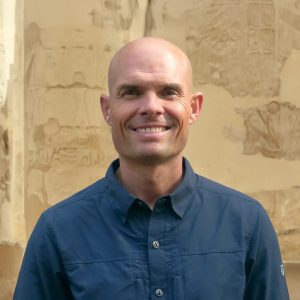 Brad Grey, President and CEO of Walking the Text
Walking the Text is a non-profit organization that creates digital media resources and study trips to Bible Lands to help people understand the Bible in its original context. He is the co-creator and host of The Lord’s Payer Film and The Sacred Thread, and the author of Make Your Mark. Brad is also a national speaker, ordained minister, and former teaching pastor.
He has a business management degree from Cornerstone University (Grand Rapids, Michigan), a Master of Divinity from Western Theological Seminary (Holland, Michigan), and has done additional graduate work at Jerusalem University College (Jerusalem, Israel). Brand and his wife, Shallon, live with their four children in the Greater Nashville area.
 Brad Nelson—Content Director at Walking the Text
Brad curates The Teaching Series, a bi-weekly podcast and video series, and is a co-creator and writer for The Sacred Thread. He is a national speaker, writer, and served in the local church as a pastor for 17 years.
Brad has a Bachelor of Arts in history from Cornerstone University (Grand Rapids, Michigan) and a Master of Divinity from Western Theological Seminary (Holland, Michigan) and has done additional graduate work at Jerusalem University College (Jerusalem, Israel). He and his wife Trisha live with their three daughters in Greensboro, Georgia.
Movie: The Lord’s Prayer Movie (requires subscription to the Angel app)
Book: Bringing Heaven Here: How the Lord’s Prayer Can Change Your Life and Our World*
by Brad Gray and Brad Nelson
Website: walkingthetext.com
_____________
James Early, the Jesus Mindset Coach, is a Bible teacher, speaker, and church mentor. He conducts Bible workshops online and in person. His focus is on getting back to the original Christianity of Jesus by learning to think, pray, and love like Jesus. Contact him here.
Make a donation to support the show
Listen and leave a review on



_____________
Bible References
Psalm 2:7 NIV
7 Thou art my Son; this day have I begotten thee.
Luke 13:20, 21 KJV
20 And again he said, Whereunto shall I liken the kingdom of God?
21 It is like leaven, which a woman took and hid in three measures of meal, till the whole was leavened.
Matthew 5:15 NLT
15 No one lights a lamp and then puts it under a basket. Instead, a lamp is placed on a stand, where it gives light to everyone in the house.
Matthew 6:9-13 KJV
9 In this manner, therefore, pray:
Our Father in heaven,
Hallowed be Your name.
10 Your kingdom come.
Your will be done
On earth as it is in heaven.
11 Give us this day our daily bread.
12 And forgive us our debts,
As we forgive our debtors.
13 And do not lead us into temptation,
But deliver us from the evil one.
For Yours is the kingdom and the power and the glory forever. Amen.
Matthew 28:19 NIV
19 Therefore go and make disciples of all nations, baptizing them in the name of the Father and of the Son and of the Holy Spirit,