It’s time to get back to Bible basics
Has this ever happened to you? You’re digging really deep into your Bible study and you come across something you never saw before or you get curious about something you’ve never thought of before, and all of a sudden you think it’s the most important thing to figure out. Well, I have to break it to you, when that happens it means it’s actually time to get back to Bible basics.
Here are some of the things I’m talking about. There are people who spend a lot of time and effort trying to figure out the exact geographical location of the Garden of Eden. Now, that can be interesting and if somebody wants to spend their time that way, I’m not going to stop them. But how important is that?
Here are some other things people get fascinated with and spend a little too much time on in my opinion. How many Wisemen actually were there who went to find baby Jesus and what were their names? We usually think of the number as three and there are some traditional names given to them, but none of that’s in the Bible. People can get into pretty intense debates about it. And they’ve got all kinds of theories.
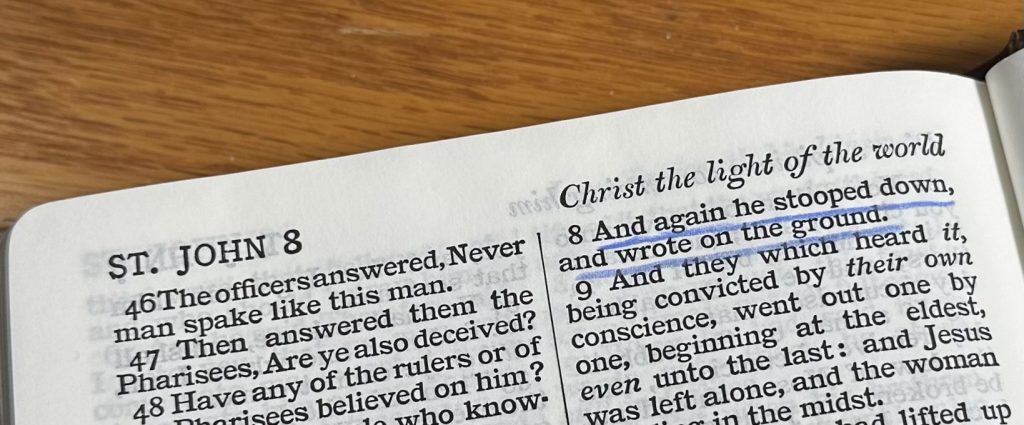
And there’s the question of what Jesus wrote in the dirt when the Pharisees came to him accusing a woman caught in adultery. Or what about Paul’s thorn in the flesh? I’ve heard all kinds of speculation as to what that could be.
Some things are distraction from Bible basics
Does it really matter where the Garden of Eden was? If you knew this information, would it help you love your neighbor as yourself better? Would it help you follow Jesus more closely?
And what about the question of how many Wisemen there were or what their names were? Does it change how much God loves you and your need to leave behind any sinful or materialistic attitudes and practices?
If you knew what Jesus wrote in the dirt, how would that make a difference in your life? And if you knew exactly what Paul’s thorn in the flesh was, would that make you a better Christian? You might be able to identify with him or you might be a little judgmental of him. Who knows?
Maybe that was private information and we don’t need to know. Would you want your private information discussed, dissected, and speculated about inaccurately for thousands of years? Probably not.
And then there are the times when we’re in the middle of a challenge and our prayers turn into intellectual exercises of trying to find just the right Bible verse, just the right thing we need to pray about. We get so involved in looking up every possible idea that might be helpful, we lose the bigger picture of God being in charge.
When I hear this sort of thing, or if I get involved in this kind of discussion, which happens sometimes, it reminds me that it’s time to put first things first, to get back to Bible basics.
Get back to the simple Bible basics
What do I mean by that? Well, let me give you an example.
Recently I was talking to a friend who was struggling with a challenge he was having in his local political scene. There were people from both political parties who worked well together for the common good of their community. He was one of them. But others could not see the value of working with someone from the opposite political party.
And then there were the people, some on both sides of the political spectrum, who just didn’t seem qualified for the task or position they had. This happens on a State and National level as well.
My friend was frustrated. The problem seemed so overwhelming he didn’t really know how to pray about it. He was focused on all the details of the situation but needed to get a broader perspective of what the problem was and how to pray about it.
I shared this idea of getting back to the basic ideas in the Bible, that there is one almighty God we can appeal to, whatever our challenges are. I said it’s important to start with the fact that God is willing and able to bring inspiration, clarity, and resolution to whatever the problems were in the local political situation.
He responded with an idea that is so simple but powerful. It dawned on him that he needed to include everyone in his prayers and see them all as children of God. He pointed out the Lord’s Prayer begins with the words, “Our Father,” referring to God. He realized Jesus said we should pray in a way that we acknowledge God as the father of everyone.
We chatted for a while along these lines and my friend felt much more settled because he had gotten back to Bible basics, one God, who is the Father of all. He felt his prayers would now be more focused and effective because he had a strong foundation in one of the fundamental truths of the Bible.
The human mind takes too many detours
I’ve been thinking about our conversation and realized that all too often the human mind, even under the guise of studying the Bible and wanting to know God better, can sometimes get absorbed in and get distracted by things in the Bible which are not really that significant.
We can put so much attention on things that really don’t help us grow spiritually. Why do we do this?
Well, I don’t know if this is a problem for you, but sometimes I have been fixated on a particular detail or topic in the Bible and spent lots of time researching it and then suddenly realized I had gone down the proverbial rabbit hole, chasing something that was not that important.
And the “funny” things is, this can happen on big topics as well, in regard to various church doctrines. On several occasions I’ve talked to someone who took the exact opposite position that I did on a particular theological point.
As I’ve said before on The Bible Speaks to You Podcast, I’ve realized from these kinds of conversations that some folks have more faith in, and a better relationship with, their theology than they do with God.
And during these conversations where we disagree on some doctrinal point, I have to ask myself, and I’ve often asked the other person: How does your belief in this particular theological doctrine help you love God and your neighbor better? That usually puts things back in perspective.
Sometimes it’s the little distractions but sometimes it’s the big ones that get us off track from the basic message of the Bible. We really do need to get back to the basics of the Bible.
Jesus warns us about veering off from the Bible basics
But this is not a new problem. Jesus also had to deal with this tendency of the human mind to get absorbed in the details but neglect what is most important. In fact, he saw this tendency specifically in the Pharisees and called them on it. Jesus says,
Woe to you, teachers of the law and Pharisees, you hypocrites! You give a tenth of your spices—mint, dill and cumin. But you have neglected the more important matters of the law—justice, mercy and faithfulness. You should have practiced the latter, without neglecting the former. You blind guides! You strain out a gnat but swallow a camel. Matthew 23:23, 24 NIV
I just love the way Jesus uses graphic images to illustrate a point.
The Pharisees were trying to apply the concept of tithing, which is not a bad idea at all, (giving a tenth of what you have to God), to every tiny detail of their lives. They were so focused on trying to be faithful in the smallest things, they left out the bigger things of justice, mercy, and faithfulness.
How often do you and I do this in our lives, in our Bible study, in the way we practice our faith?
When a family, an organization, or a church gets off course from their purpose because they’re caught up in the details, they really need to have a moment of self-awareness and make a choice to get back to basics, to put first things first, to focus on the most important things.
Churches need to stick with the Bible basics too
In the book of Revelation, one of the seven churches Jesus tells John to write a letter to has this very problem. Jesus says,
To the angel of the church in Ephesus write: These are the words of him who holds the seven stars in his right hand and walks among the seven golden lampstands. I know your deeds, your hard work and your perseverance. I know that you cannot tolerate wicked people, that you have tested those who claim to be apostles but are not, and have found them false. You have persevered and have endured hardships for my name, and have not grown weary. Yet I hold this against you: You have forsaken the love you had at first. Consider how far you have fallen! Repent and do the things you did at first. If you do not repent, I will come to you and remove your lampstand from its place. Revelation 2:1-5 NIV
The church in Ephesus was doing good things. They worked hard and did not tolerate evil. They persevered in hard times, but in all their doing, they left behind the original love they had.
I’m reading between the lines here, but I’m assuming this could mean love for God, love for Jesus, and love for others.
Is your church sticking with the Bible basics?
Without this first love in their hearts, it’s no wonder they weren’t doing the same kinds of things they did when they first became followers of Jesus.
Now you may think this warning in the book of Revelation, which comes directly from Jesus, is just intended for the church in Ephesus, but the fact is, this applies to you and me today and to our churches.
Are you and/or your church so busy and preoccupied with doing everything the “right” way that the original love you had for God, for Jesus, for your fellow church members, and your community is missing? And as a result, even though you’re busy doing things, your accomplishments are more a result of your human effort rather than manifestations of God at work in your life.
Unfortunately it’s all too easy to think, like the Pharisees, that if you focus on all the details, it will all work out in the end. But this is not very often the case.
What was most important to Jesus?
So what did Jesus focus on? What were some of the basics he emphasized? What was on his list of putting first things first?
If you ever want to know what Jesus thought on a particular topic, you can usually find a clue in the Sermon on the Mount. (And of course everything else he said throughout the Gospels.)
But let’s look at the way Jesus started what we often call the Lord’s Prayer. How does he start that prayer? You know this.
Our Father in heaven, hallowed be your name, Matthew 6:9 NIV
What is the first-thing-put-first in that prayer, the first priority? It’s the fact that God is our Father, as my friend realized. Jesus is saying in order for your prayers to be effective you need to acknowledge God as the Father of everyone. That’s the priority. That’s the basic standpoint you start with.
Jesus reiterates this same idea of putting God first when he says later in that same chapter,
do not worry, saying, ‘What shall we eat?’ or ‘What shall we drink?’ or ‘What shall we wear?’
But seek first his [God’s] kingdom and his righteousness, and all these things will be given to you as well. Matthew 6:31, 33 NIV
Heaven was first on Jesus’s list of Bible basics
Everything Jesus said and did pointed back to his first priority, the kingdom of heaven. He started his ministry declaring this.
From that time Jesus began to preach, and to say, Repent: for the kingdom of heaven is at hand. Matthew 4:17 KJV
When he sent out his disciples to preach and heal, he told them, to tell people about the kingdom of heaven.
These twelve Jesus sent forth, and commanded them, saying, Go not into the way of the Gentiles, and into any city of the Samaritans enter ye not: But go rather to the lost sheep of the house of Israel. And as ye go, preach, saying, The kingdom of heaven is at hand. Heal the sick, cleanse the lepers, raise the dead, cast out devils: freely ye have received, freely give. Matthew 10:5-8 KJV
Jesus expected his disciples not just to say the words, “the kingdom of heaven is at hand,” but to be conscious of the truth of heaven’s presence here and now. The result of that awareness of heaven at hand was healing.
Maybe this awareness of heaven and healing are the first love and the first works Jesus was talking about when he told John in the book of Revelation to write to the church in Ephesus.
If you’re ever not sure how to pray about something, you can always start with the Lord’s Prayer and its emphasis on beginning with God as the Father of all, and follow that prayer to focus on God’s nature, His kingdom, and His will. This is getting back to the basics of the Bible, specifically the basics of Jesus’s teachings.
What are your Bible basics?
So, what are these Bible basics and how do we get back to them? If you had to summarize the Bible in just a few basic points, what would they be?
There’s not one perfect answer here and different people will emphasize different things. I’ve been thinking about this and here’s what I’ve come up with. As I said, it’s not the perfect answer and as I was writing these out, I changed and revised them many times and probably will in the future.
Here’s what I see as five Bible Basics:
- There is one God, the creator of the universe, and He wants a covenant relationship with you.
- God is the true source of salvation from sin, oppression, hardship, disease, and finally death.
- Jesus came to save us from the darkness of materialism and evil, and reveal to us and in us the light of the kingdom of heaven.
- The Holy Spirit ushers us into the kingdom of heaven beginning right now, here on earth.
- God’s goodness and love will ultimately destroy all evil and hate because with God all things are possible.
That’s what I came up with. How would you define the basic teachings of the Bible, what I call the Bible basics? I encourage you to think about the core message of the Bible.
What you see as the over-arching themes in the Scriptures may be similar to mine or very different. You may come up with more than I did or fewer.
Once I asked someone to sum up the Bible and they simply said: God is Love and wins in the end. It can’t get more basic than that.
Discovering the essence of the Bible
The more you can distill the Bible into its essence, the more you’ll be able to keep focused on what’s important when someone gets caught up in debating things that really aren’t that important. It will keep you on the path of following Jesus and not chasing those proverbial theological rabbits down their rabbit holes.
When you have a challenge and it doesn’t seem your prayers are getting you anywhere, it’s time to get back to the Bible Basics. Remember there is one God who loves you. He is ready, willing, and able to help you.
Take an honest look at the mistakes you’ve made and the sins you’ve committed, big or small, private or public, turn away from the thoughts and desires that caused you to make those mistakes, and turn to God with all your heart. Those are basic themes in the Bible.
Remember the Bible basics
Remember Jesus’s promise that the kingdom of heaven is at hand, and follow his teachings to the best of your ability.
There are definitely times when your prayers need to be more detailed and specific once you have a strong spiritual foundation of these big-picture, fundamental Bible principles. But it’s almost always a good idea to put first things first, to start with the overarching spiritual truths which Jesus teaches. Then go from there.
Again, I encourage you to think about the entire message of the Bible. How would you summarize that message in five to seven major points?
The next time a challenge comes up and you’re not sure the best way to pray, the next time someone is absorbed in some minor detail in the Bible as if it’s the most important thing, or if you catch yourself getting off track debating some doctrine that really doesn’t help you love God and your neighbor better, these are all times to come back to those basic, core messages in the Bible.
It’s time to put first things first, to get back to basics, the Bible basics, that keep you focused on God, Jesus’s teachings, and the kingdom of heaven at hand.
_____________
James Early, the Jesus Mindset Coach, is a Bible teacher, speaker, and church mentor. He conducts Bible workshops online and in person. His focus is on getting back to the original Christianity of Jesus by learning to think, pray, and love like Jesus. Contact him here.
Make a donation to support the show
Listen and leave a review on



_____________
Bible References
Matthew 23:23, 24 NIV
23 Woe to you, teachers of the law and Pharisees, you hypocrites! You give a tenth of your spices—mint, dill and cumin. But you have neglected the more important matters of the law—justice, mercy and faithfulness. You should have practiced the latter, without neglecting the former.
24 You blind guides! You strain out a gnat but swallow a camel.
Revelation 2:1-5 NIV
1 To the angel of the church in Ephesus write: These are the words of him who holds the seven stars in his right hand and walks among the seven golden lampstands.
2 I know your deeds, your hard work and your perseverance. I know that you cannot tolerate wicked people, that you have tested those who claim to be apostles but are not, and have found them false.
3 You have persevered and have endured hardships for my name, and have not grown weary.
4 Yet I hold this against you: You have forsaken the love you had at first.
5 Consider how far you have fallen! Repent and do the things you did at first. If you do not repent, I will come to you and remove your lampstand from its place.
Matthew 6:9 NIV
9 Our Father in heaven, hallowed be your name,
Matthew 6:31, 33 NIV
31 do not worry, saying, ‘What shall we eat?’ or ‘What shall we drink?’ or ‘What shall we wear?’
33 But seek first his [God’s] kingdom and his righteousness, and all these things will be given to you as well.
Matthew 4:17 KJV
17 From that time Jesus began to preach, and to say, Repent: for the kingdom of heaven is at hand.
Matthew 10:5-8 KJV
5 These twelve Jesus sent forth, and commanded them, saying, Go not into the way of the Gentiles, and into any city of the Samaritans enter ye not:
6 But go rather to the lost sheep of the house of Israel.
7 And as ye go, preach, saying, The kingdom of heaven is at hand.
8 Heal the sick, cleanse the lepers, raise the dead, cast out devils: freely ye have received, freely give.